
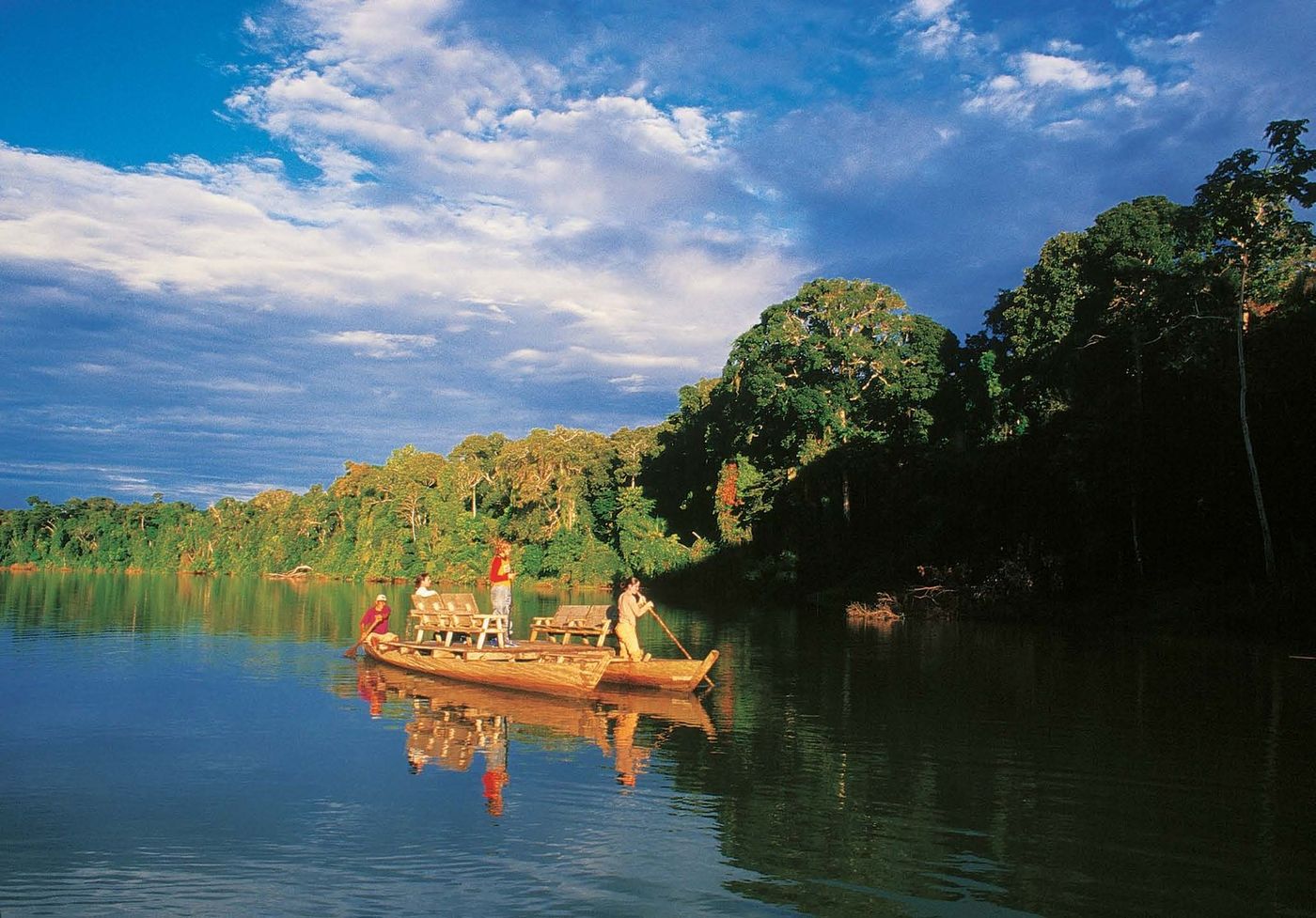
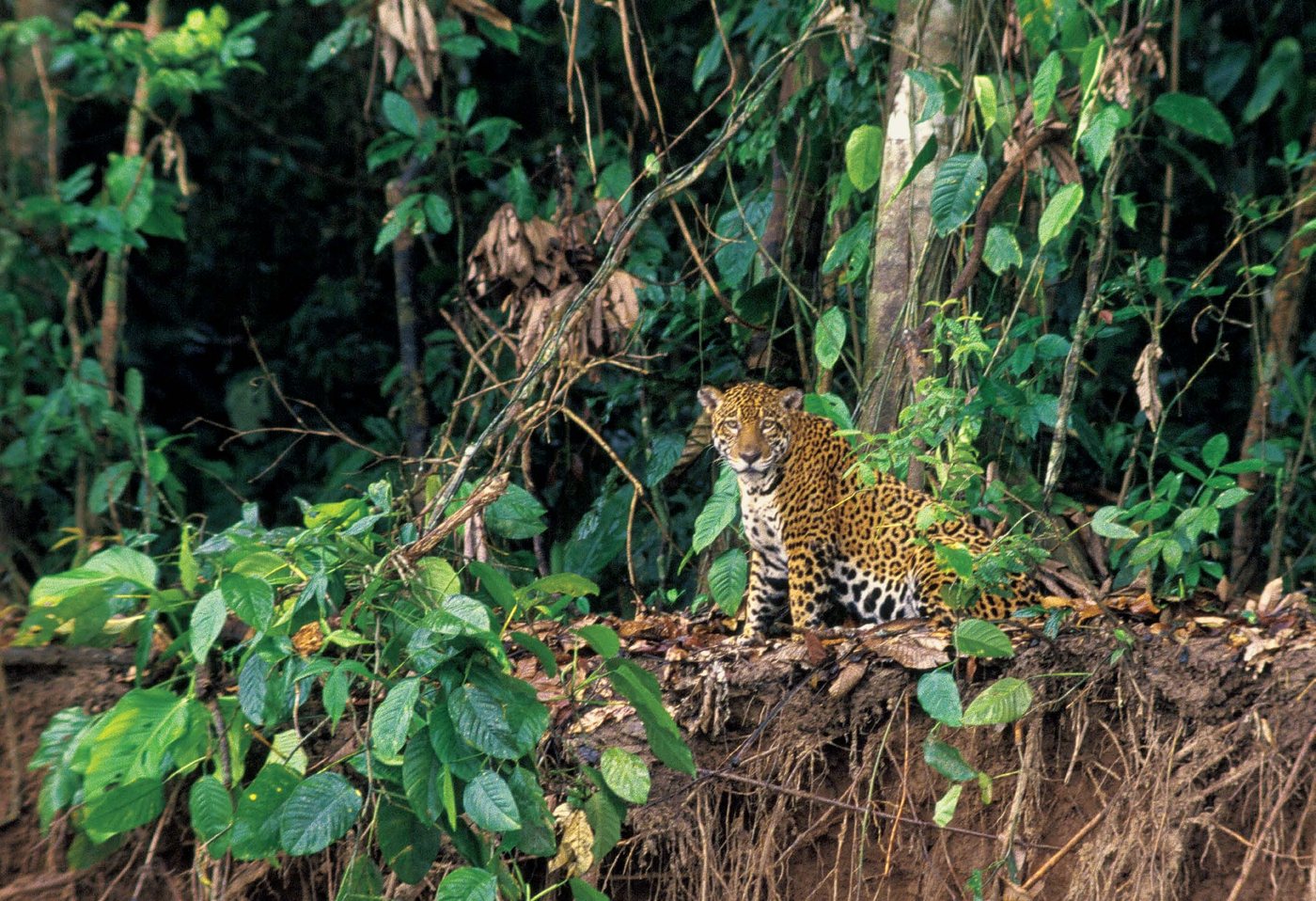
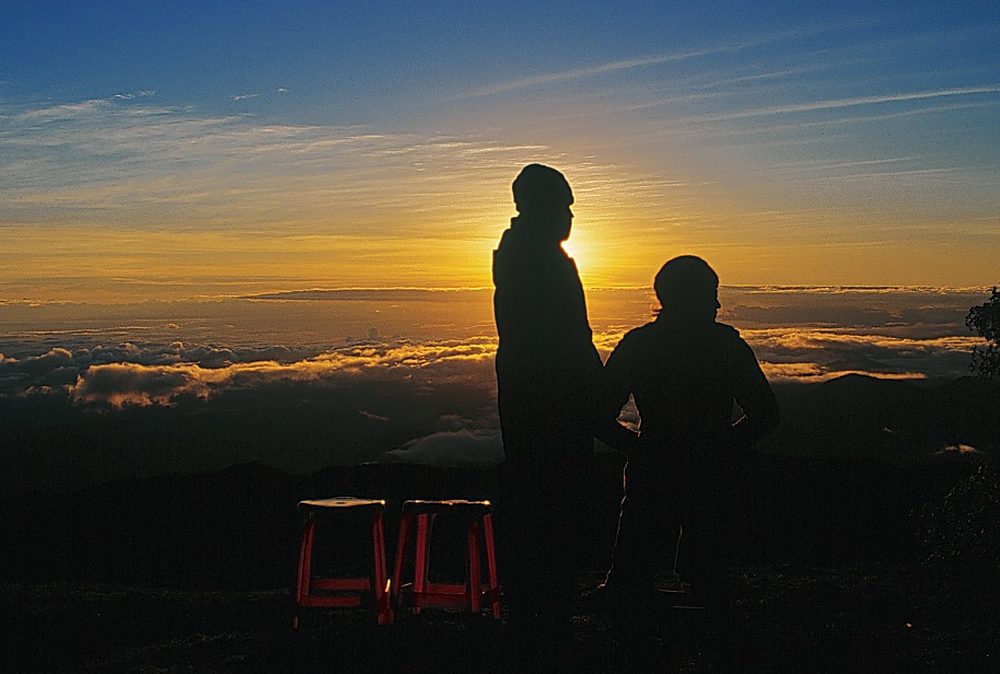
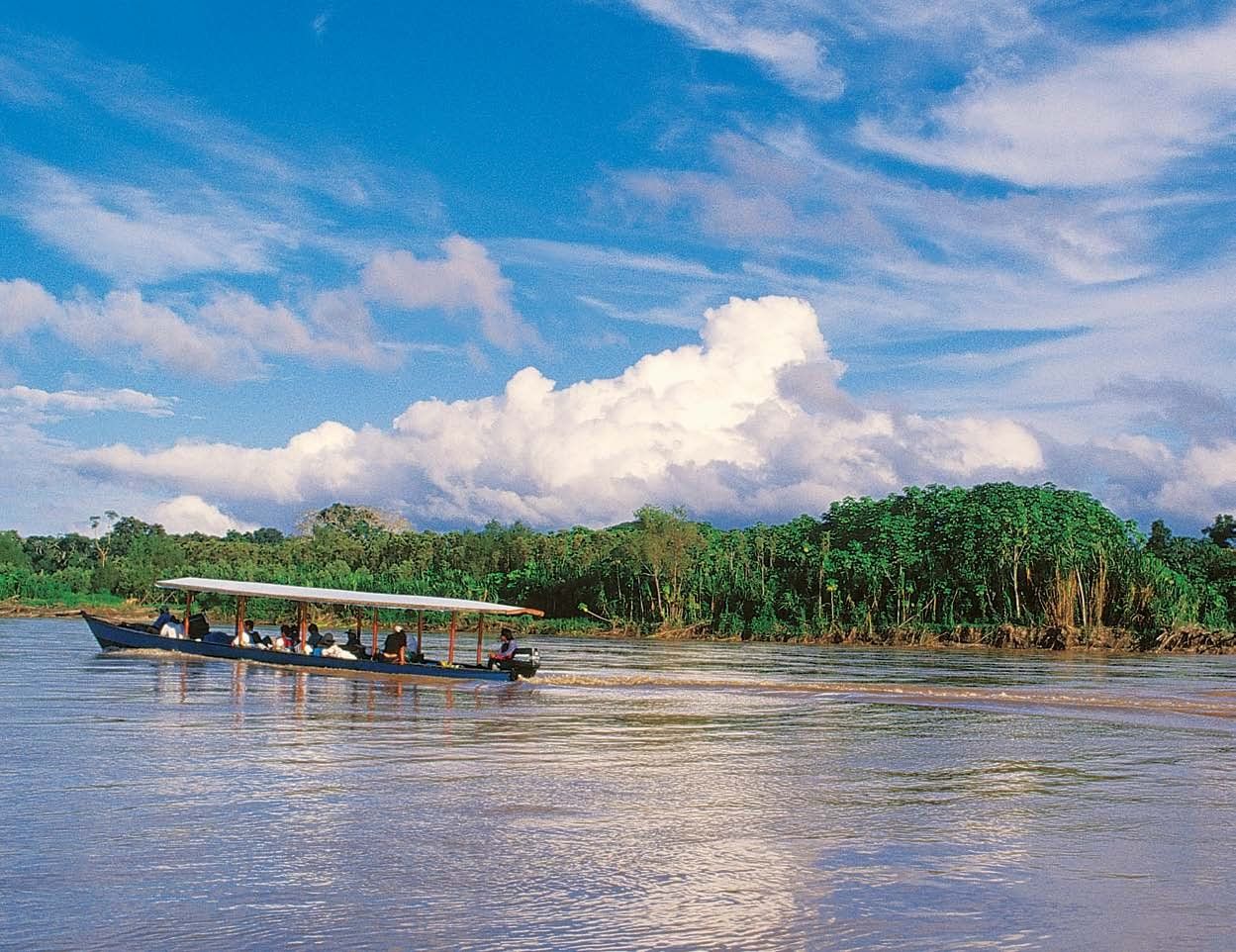

A canoe on Cocha Juárez, Manu National ParkA jaguar in the undergrowthScarlet macaws on a clay wallA male cock-of-the-rock on a branchSunrise over the sea of clouds at Tres CrucesA boat with travelers on an Amazon river
Home › Destinations › Cusco › Manu
Cusco Region

Manu

From highland puna at 4,000 meters down to the Amazon lowlands at 200: Peru’s best-preserved tropical forest, a UNESCO Natural World Heritage Site, just 165 km from Cusco.

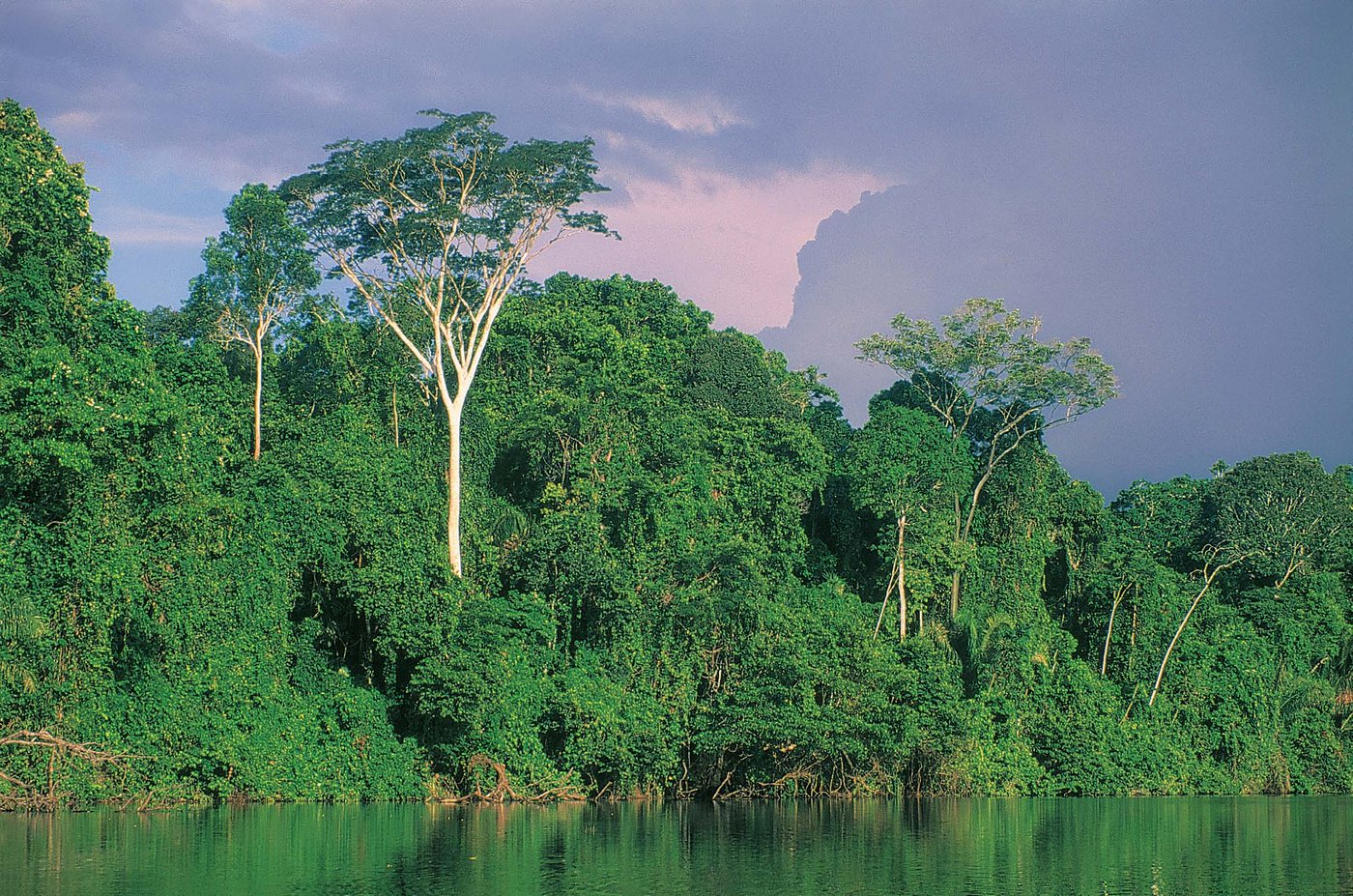
Canoeing on Cocha Juárez

“An old Matsiguenka myth ends like this: ‘Once all the frogs and toads spoke like the Matsiguenka; now we no longer understand them.’ Bad tourism must not become one more reason to widen the gap between people and the nature of Manu.”

Rafo León

Cecilia in Manu

In 2003, Cecilia traveled to Manu with the BienVenida team, from the Andes all the way down to the lowland jungle.

“The journey to Manu covers changing natural scenery, from 4,300 meters in the Andean highlands to 200 meters in the exuberant tropical jungle. An unforgettable experience for any traveler.”

Signature of Cecilia RaffoEditorial, 2003
Read more
  1. 2003

    “It is an opportunity to see a significant number of animals and birds that can be found in few other places on the planet.”

  2. 2003

    “Local authorities and central government, investors, operators and local communities must be very clear that support for wildlife and the sustainable development of the communities should be the principal objectives of any intervention in the zone.”

  3. 2003

    “We would like to thank our fantastic guides Samuel Solís and Andrés Laura for sharing their experiences and concerns with us (…) on this trip to Manu, a trip that combines natural beauty and an environmental challenge.”

Excerpts from the editorials signed by Cecilia Raffo, editor of BienVenida magazine.

Must-sees

From the Andes to the lowland jungle

The overland journey descends through every one of Manu’s life zones — puna, cloud forest, upper jungle and lowland rivers — all the way to the oxbow lakes of the National Park. Tap any highlight to follow it in the Road Book.

Road Book BienVenida

Overland to Manu, from 4,000 to 200 meters

Reaching Manu overland from Cusco is a superb chance to watch the landscape transform from 4,000 down to 200 meters. Along the way there are hikes, rafting, birding and the cock-of-the-rock in the cloud forest — all before you even enter the Park.

Road book by the BienVenida team

Flora and fauna

The most biodiverse corner on Earth

A Natural World Heritage Site and National Park since 1973, Manu drops from over 4,000 to 200 meters and keeps its flora and fauna intact: a living showcase of what the Amazon looked like thousands of years ago.

  • 1300butterfly species
  • 1000bird species
  • 2000vascular plants
  • 13primate species
  • +100kinds of bats

From puna to lowlands, in a single journey

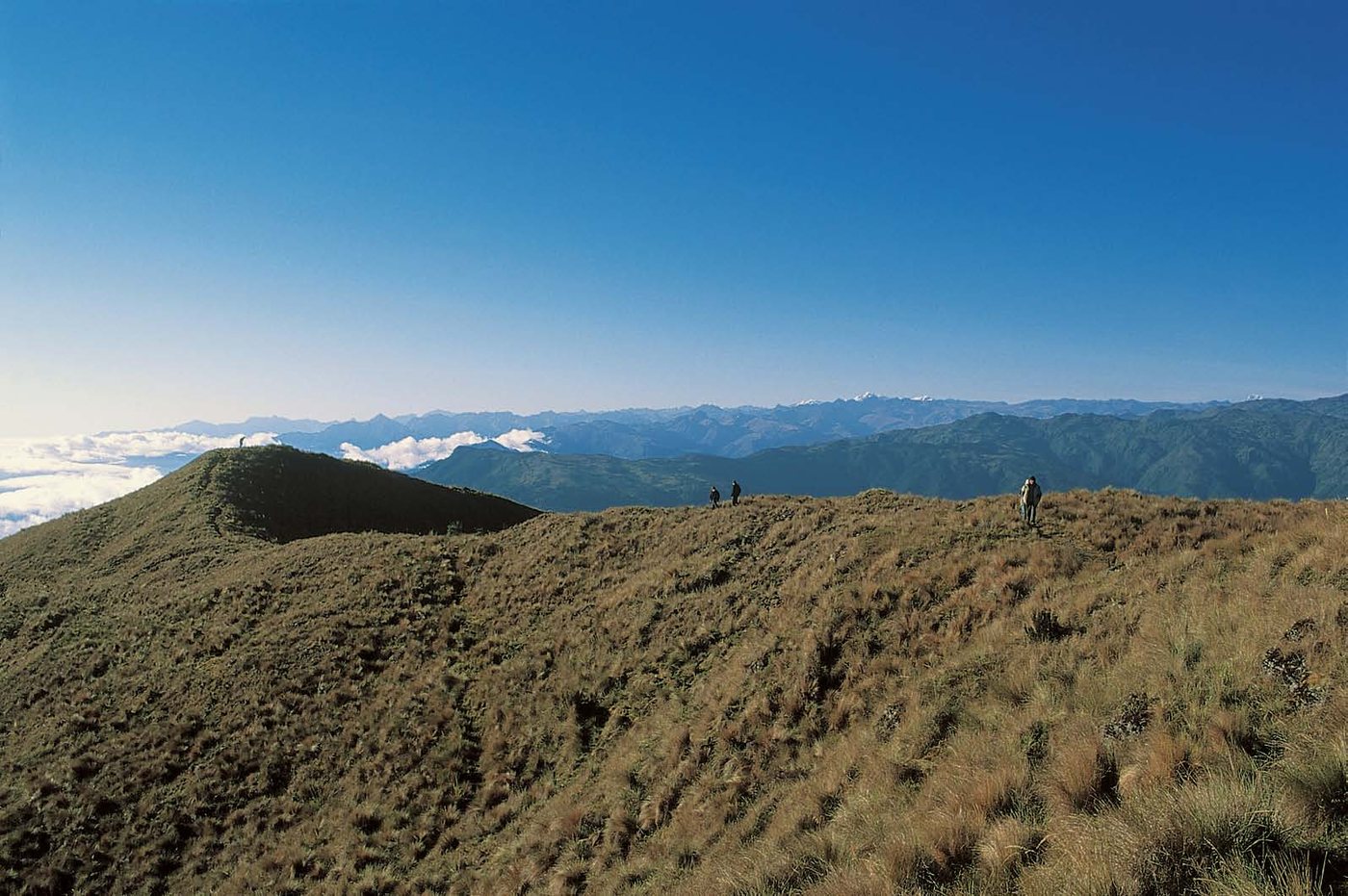
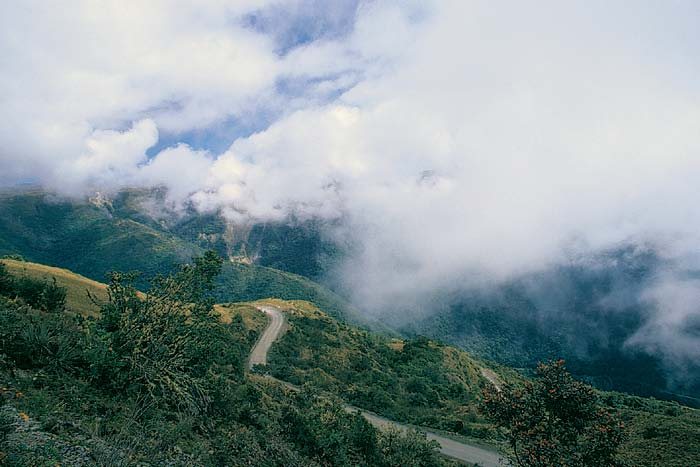
  1. Puna hills above a sea of clouds
    The puna, on the road to Tres Cruces · Photo: Roberto Fantozzi
    Above 4,000 m

    Puna

    The austere landscape of the heights: ichu grass and gnarled queñual trees.

  2. Descending the Andes

    Elfin forest

    Twisted trunks, lichens and tiny flowers in the drizzle. Home to the pudú, a deer thirty centimeters tall, and beetles the size of a sparrow.

  3. Clouds over the forested slopes, with the road
    The descent to Kosñipata · Photo: Roberto Fantozzi
    1,700 m

    Cloud forest

    Orchids, ferns and giant begonias; the cock-of-the-rock, the Andean bear and the quetzal.

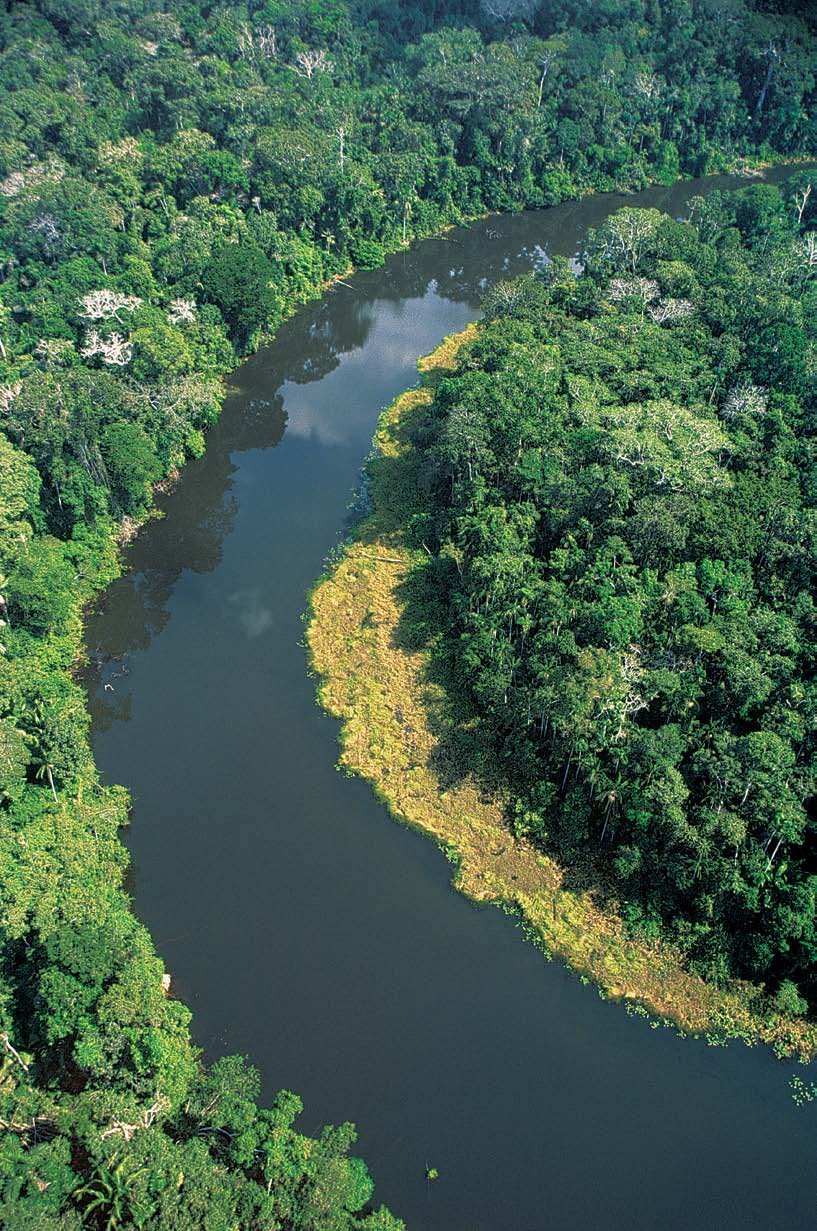
  4. A river snaking through the jungle, seen from the air
    Oxbow lakes are born when rivers change course · Photo: Walter H. Wust
    200 m

    Amazon lowlands

    Slow rivers, oxbow lakes and sixty-meter trees: jaguars, tapirs, macaws and the harpy eagle.

What you can see

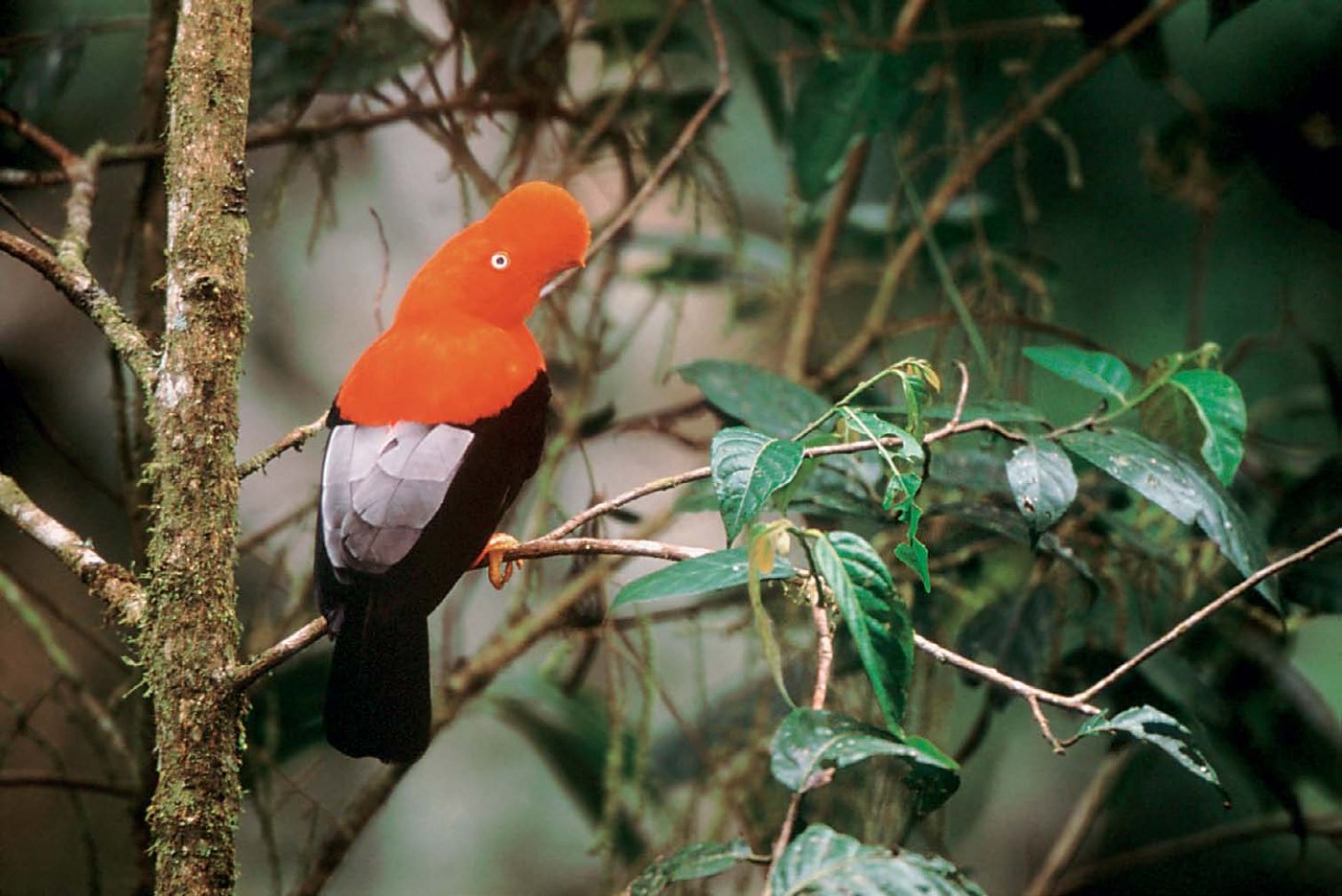
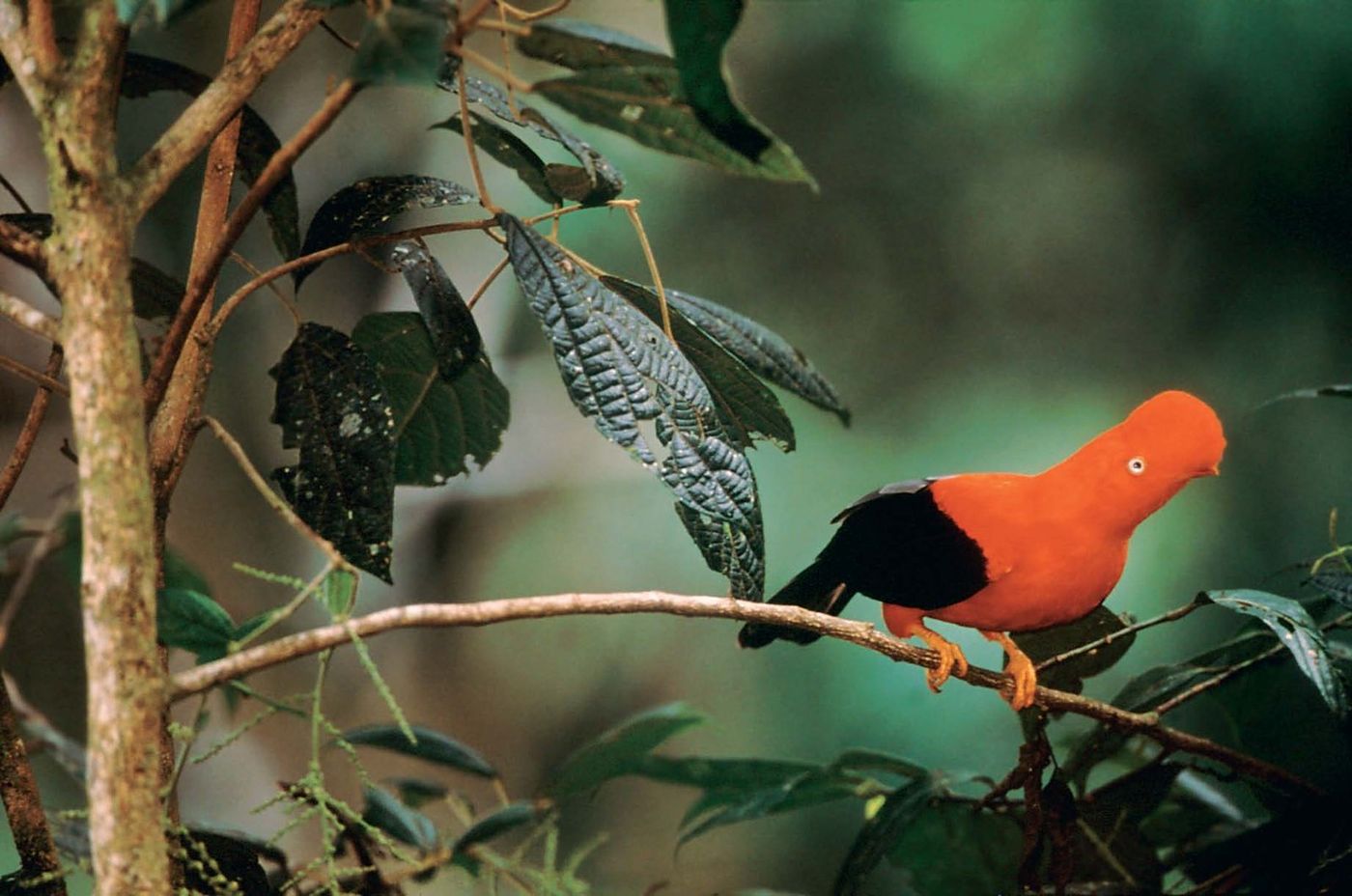
A male cock-of-the-rock among branches
A cock-of-the-rock keeping watch from its perch
1 / 2
A cock-of-the-rock in the Kosñipata forest · Photo: Peter Oxford / InkaNatura Travel
Birds

Cock-of-the-rock

Rupicola peruviana

Peru’s national bird lives in the cloud forests of Kosñipata. The males, the size of a small chicken, sport crimson, silver and black; the females, a discreet brown, tend the nest alone. Every day the males compete at the lek, a dance floor in the forest: they leap, call and spread their wings until a female picks one.

Where
Lodge platforms in the cloud forest, at 1,700 m
When
5:30 to 6:30 a.m.; in the afternoon, 4 to 5:30 p.m.
Text: Walter H. Wust
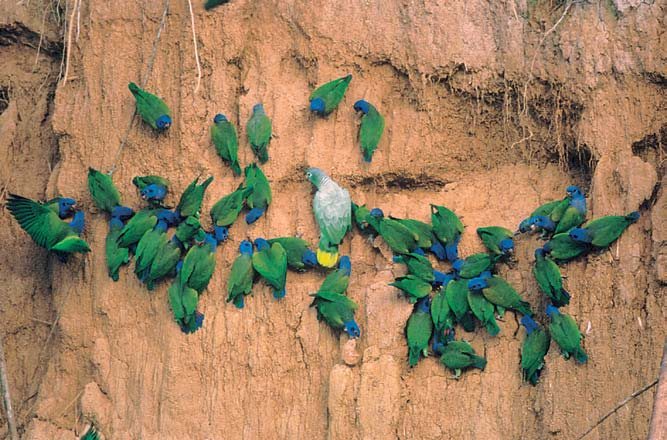
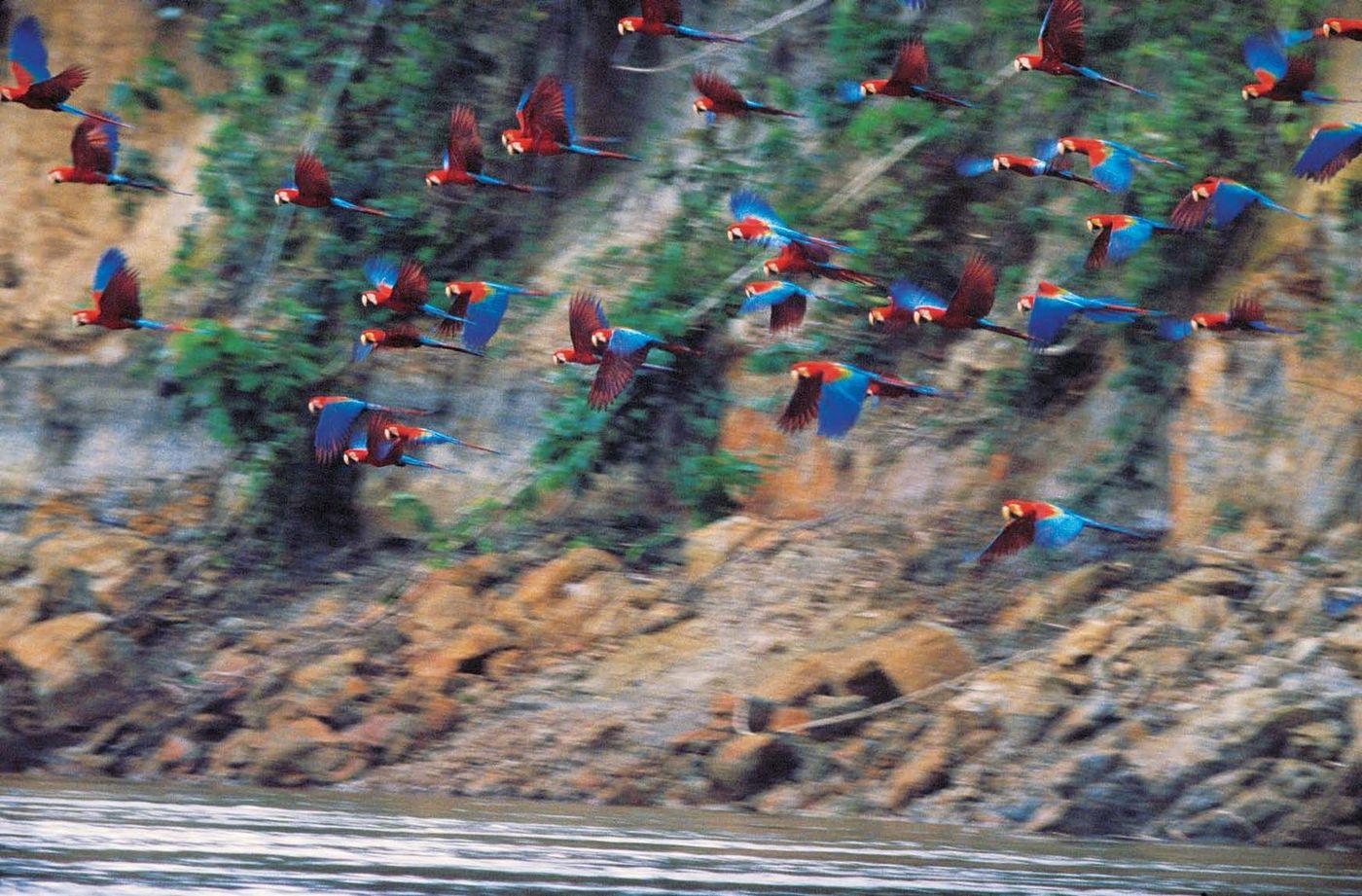
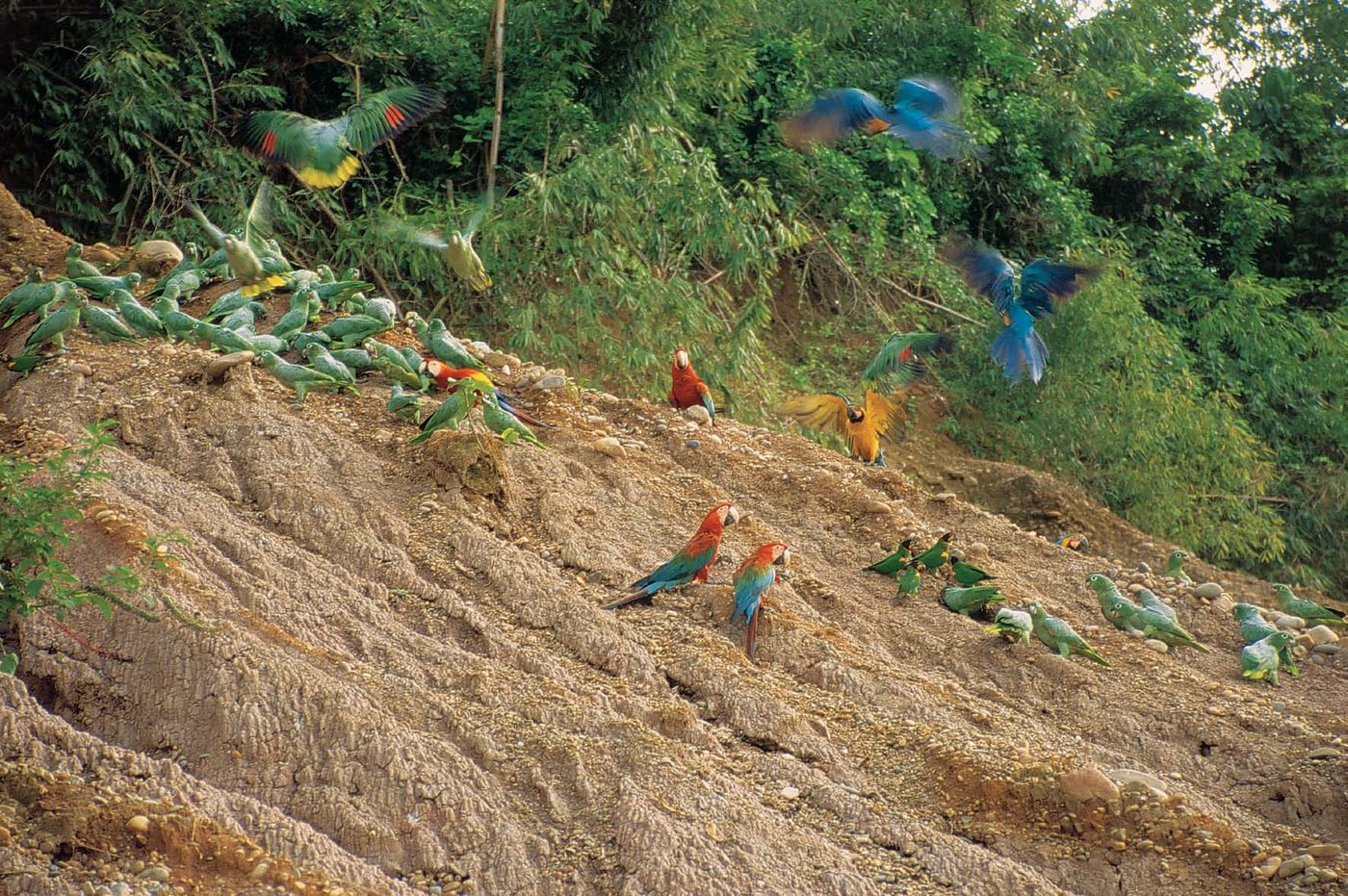
A flock of macaws and parrots on the clay cliff
Green parrots perched on the clay wall
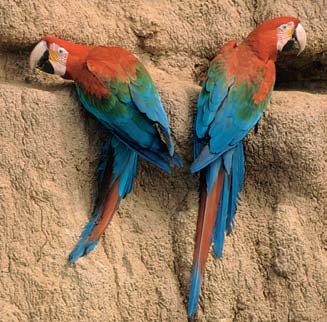
A pair of scarlet macaws on the clay wall
1 / 3
Macaws and parrots at the clay lick · Photo: Heinz Plenge
Birds

Clay-lick macaws and parrots

Collpa: “salty earth” in Quechua

Every morning, parrots of up to twelve species, including hundreds of macaws, descend on the riverbanks to eat clay. Macaws eat green seeds laden with toxins, and the clay neutralizes them; researchers also found that it supplies calcium, scarce in tropical soils. Manu is home to as many as seven macaw species.

Where
The Blanquillo clay lick, on the Madre de Dios, from a platform 30 to 40 m away
When
August, September and October
Chance
90% chance of seeing them
Text: Walter H. Wust
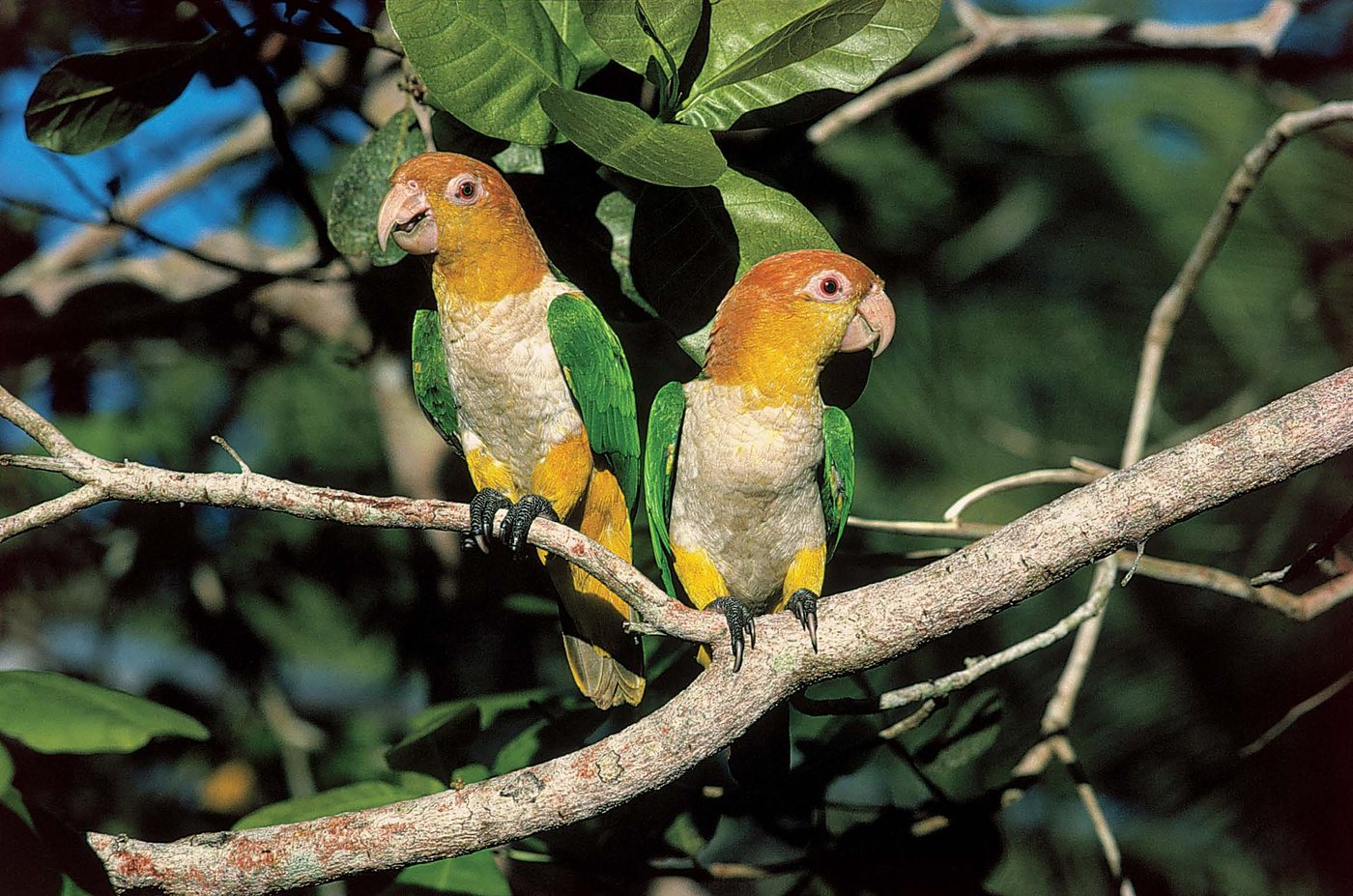
A pair of black-headed parrots on a branch
A pair of black-headed parrots · Photo: Walter H. Wust
Birds

Black-headed parrots

Pionites melanogaster

These parrots wait patiently on nearby branches for the smaller parrots to finish their daily ration of clay at the lick.

Where
Madre de Dios clay licks
Text: Walter H. Wust
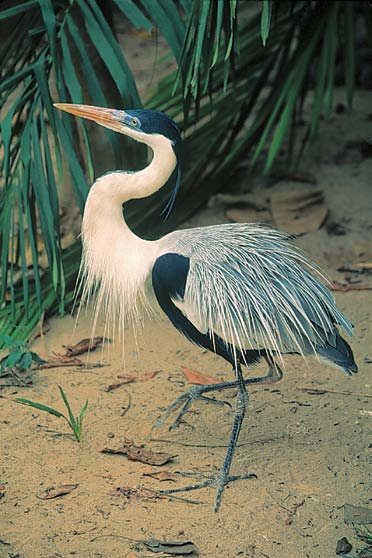
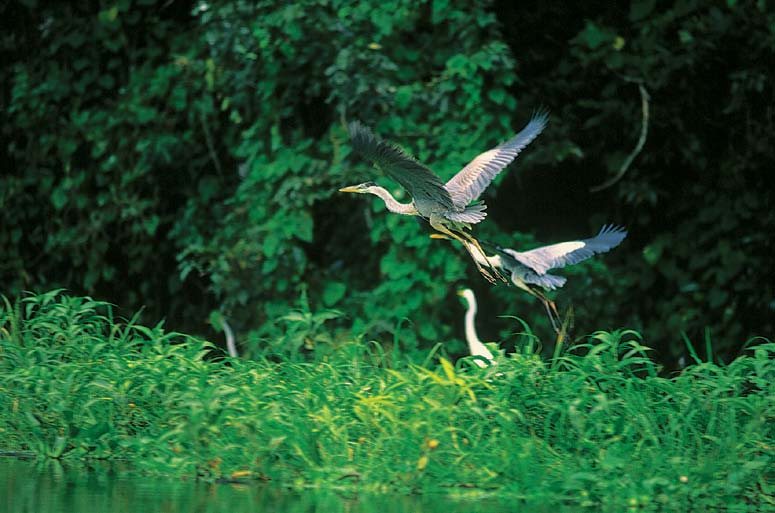
A cocoi heron on the shore
White egrets in flight over the forest
1 / 2
Cocoi heron (Ardea cocoi) · Photo: Walter H. Wust
Birds

Herons

Ardea cocoi and others

Herons keep travelers company along the Manu River. The cocoi heron, the largest in the country, patrols the muddy banks for frogs and small fish.

Where
Banks of the Manu River and the oxbow lakes
Text: Walter H. Wust
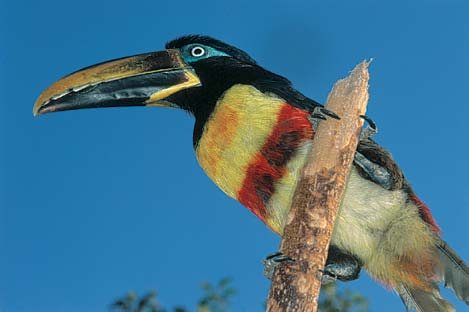
A long-billed toucan perched on a branch
Chestnut-eared aracari · Photo: Walter H. Wust
Birds

Chestnut-eared aracari

Pteroglossus castanotis

A toucan typical of secondary forest. In the lowlands, it shares the trees with macaws, herons, guans, tinamous, the harpy eagle and hummingbirds barely larger than an insect.

Where
Lowland secondary forest
Text: Walter H. Wust
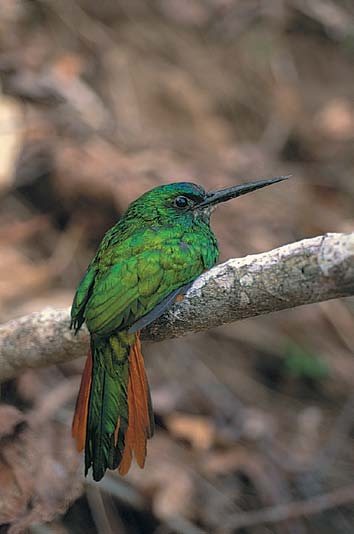
A green hummingbird perched on a branch
A cloud-forest hummingbird · Photo: Walter H. Wust
Birds

Hummingbirds

Some thousand bird species in Manu

With close to a thousand bird species, Manu draws birders from around the world. In the cloud forests, hummingbirds and butterflies flit among orchids, ferns and bromeliads.

Where
Cloud forest, a superb birdwatching area
Text: Walter H. Wust
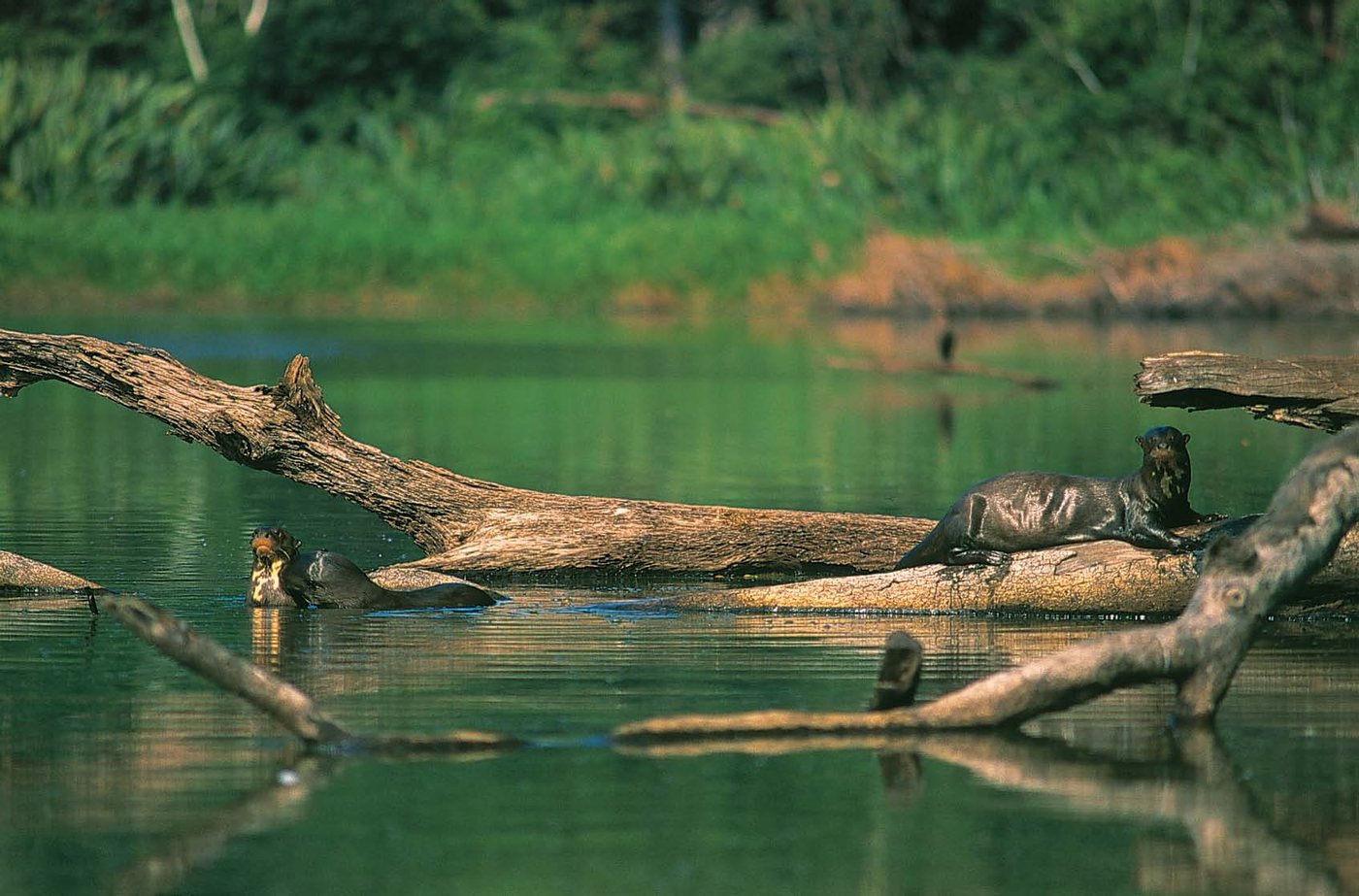
Giant otters on a log in an oxbow lake
Giant otters in an oxbow lake · Photo: Walter H. Wust
Mammals

Giant otter

Pteronura brasiliensis

The largest of the world’s 13 otters: over thirty kilos and two meters long. It lives in groups of up to eight, eats up to three kilos of fish a day and bears a unique white pattern on its throat, like a fingerprint. Hunted for its pelt across almost the entire continent, it has its largest population in the world here in Manu.

Where
Cocha Blanco, home to a family of five, and Cocha Juárez
Chance
50% at Cocha Blanco
Text: Walter H. Wust
A jaguar in the undergrowth
A jaguar in the forest · Photo: Heinz Plenge
Mammals

Jaguar, or otorongo

The great cat of the lowlands

The Amazon lowlands are hunting grounds for jaguars and enormous anacondas. According to outfitters, one in five groups entering the Park encounters a jaguar.

Where
Inside the Park, up the Manu River from El Limonal
Text: Walter H. Wust
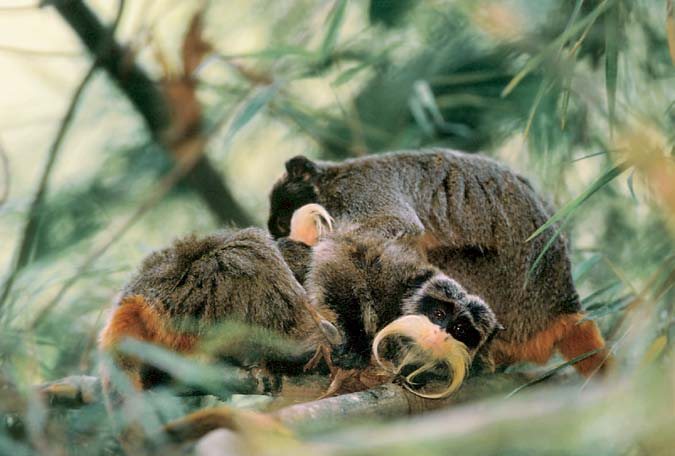
Emperor tamarins with their baby on a branch
Emperor tamarins · Photo: Incanatura
Mammals

Emperor tamarin

Saguinus imperator

In this monkey family, it’s the males that care for the young. Manu has thirteen primate species, and the farther up the Manu River you go, the more monkeys you see.

Where
Park forests
Text: Walter H. Wust
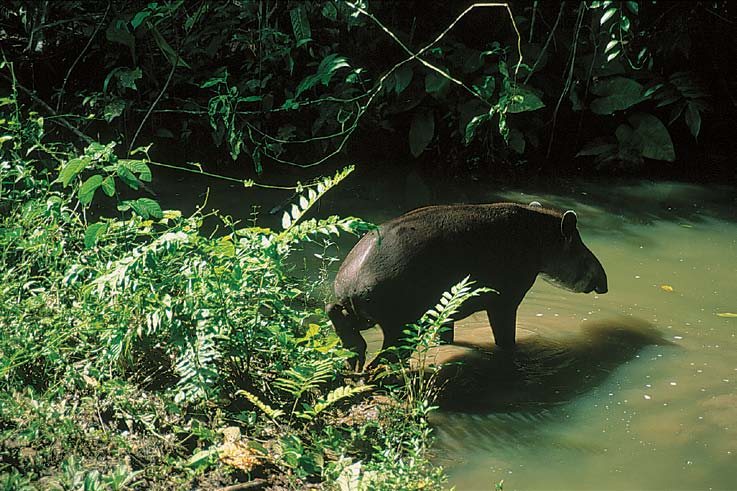
A tapir walking through the forest
A tapir · Photo: Heinz Plenge
Mammals

Tapir

Tapirus terrestris

Two-hundred-kilo tapirs share the lowlands with capybaras the size of a German shepherd, collared and white-lipped peccaries, and creatures that have barely changed since prehistoric times: armadillos, anteaters and sloths.

Where
Tapir clay lick, on the Madre de Dios
Chance
75%; they don’t come out on full-moon nights
Text: Walter H. Wust
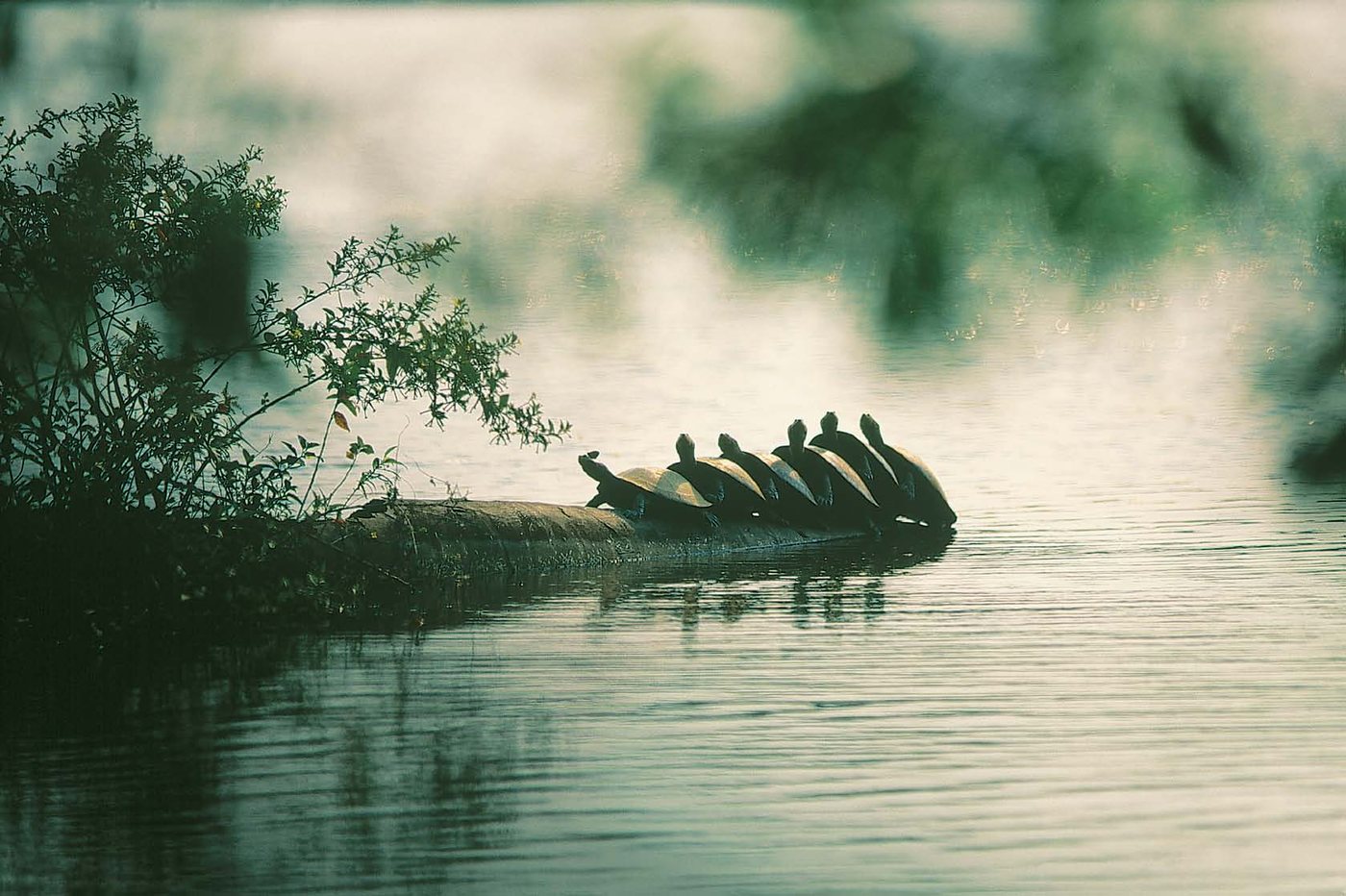
Yellow-spotted river turtles lined up on a log
Turtles on a submerged log · Photo: Heinz Plenge
Reptiles and amphibians

Yellow-spotted river turtle

Podocnemis unifilis

These turtles bask together on submerged logs along the lakeshores.

Where
Oxbow lake shores
Text: Walter H. Wust
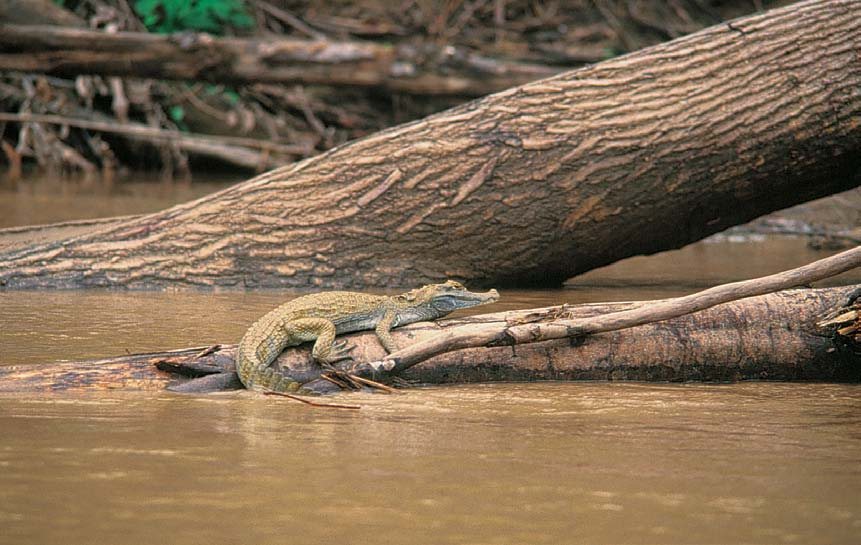
A young caiman on a log in the river
A caiman on a log · Photo: Roberto Fantozzi
Reptiles and amphibians

Caimans

Spectacled caiman and black caiman

The farther up the Manu River you go, the more caimans you’ll see; on the beaches they bask in the sun near the capybaras. The endangered black caiman also lives in the Park. Cocha Juárez is home to Clotilde, a female caiman famous among the guides.

Where
Manu River and Cocha Juárez
Text: Rafo León, Walter H. Wust
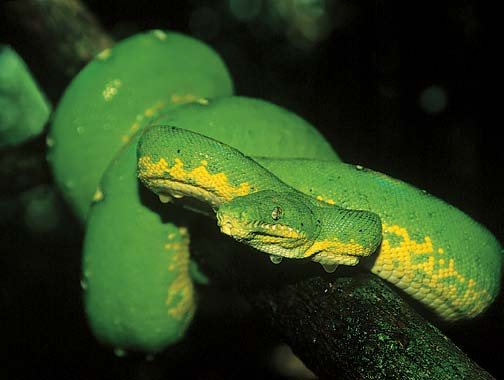
A green boa coiled on a branch
Emerald tree boa · Photo: Walter H. Wust
Reptiles and amphibians

Emerald tree boa

Corallus caninus

One of the snakes of the lowland jungle, which is also the domain of enormous anacondas.

Where
Lowland forests
Text: Walter H. Wust
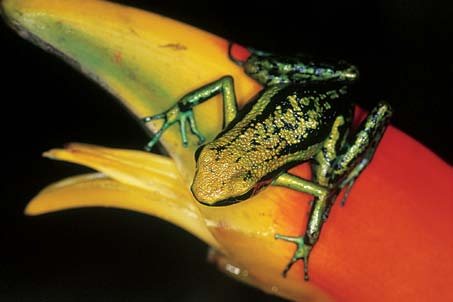
A colorful frog on a heliconia flower
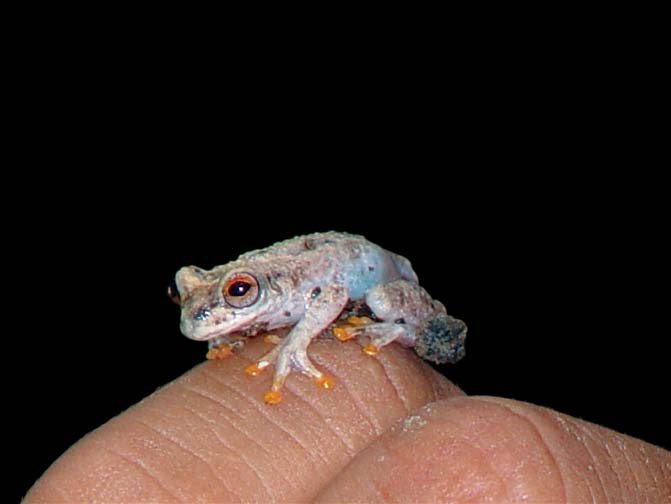
A tiny frog on a traveler’s hand
1 / 2
A frog on a heliconia flower · Photo: Walter H. Wust
Reptiles and amphibians

Frogs

Creatures yet to be discovered

Manu’s forests hold an as-yet-unimagined number of species; many of its smallest creatures remain unknown to science.

Text: Walter H. Wust
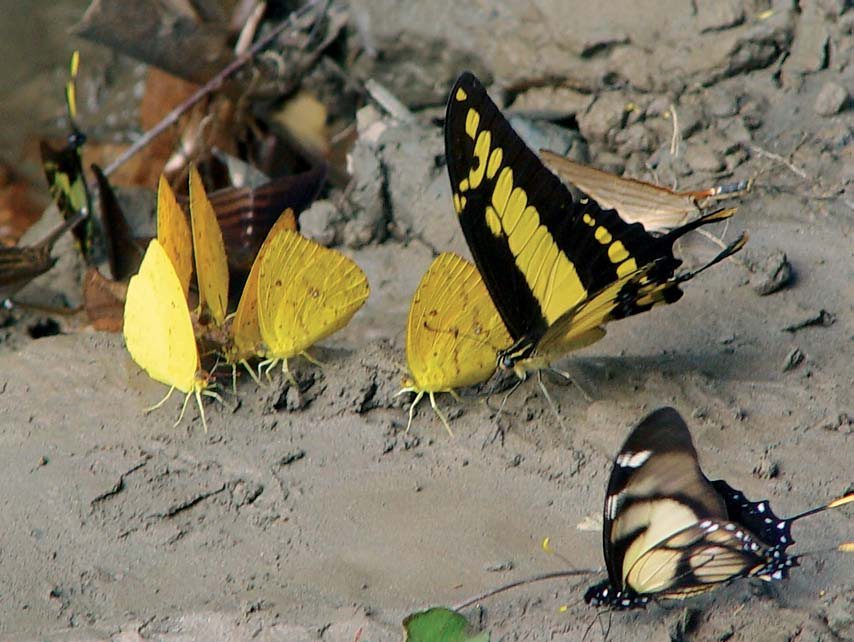
Yellow-and-black butterflies resting on the sand
Butterflies on the riverbank · Photo: Cecilia Raffo
Insects

Butterflies

Over 1,300 species

Manu has more than 1,300 butterfly species and an as-yet-unimagined number of insects. In the elfin forest there are glittering beetles the size of a sparrow.

Where
River beaches and cloud forests
Text: Walter H. Wust
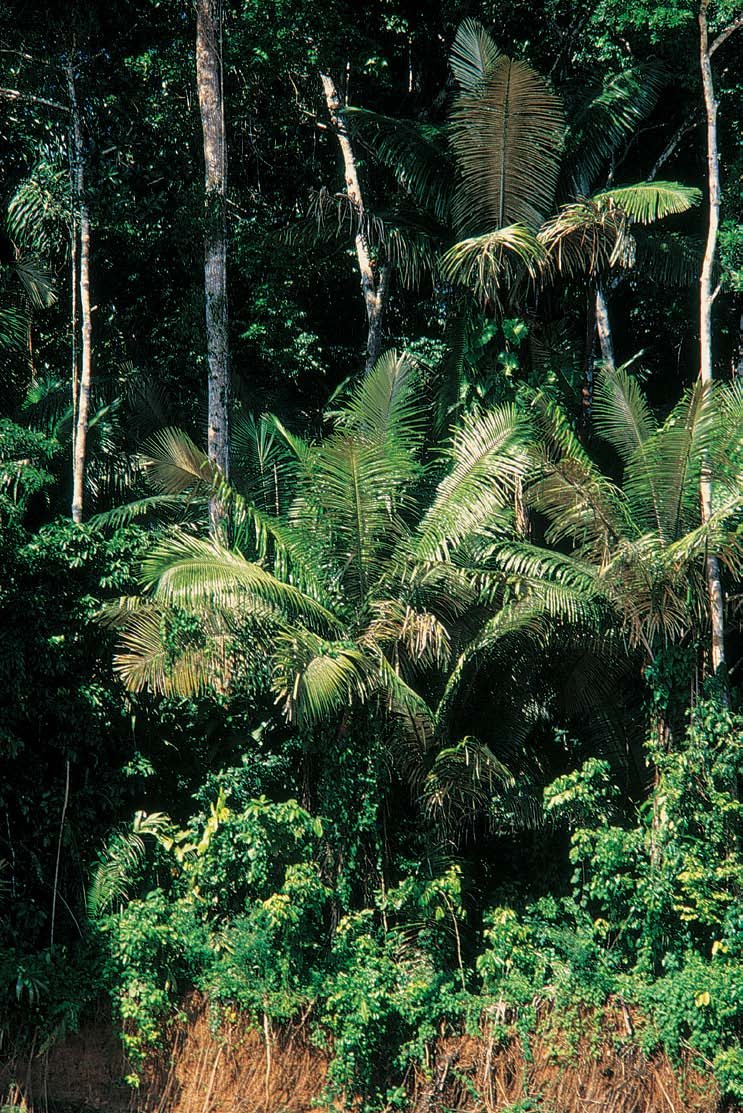
Palms and ferns in dense forest
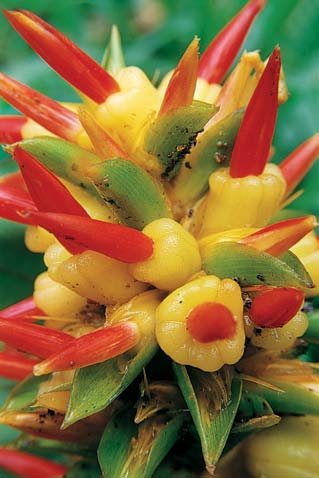
A red-and-yellow heliconia flower
1 / 2
Forest palms and ferns · Photo: Roberto Fantozzi
Flora

Cloud forest

Orchids, ferns and bromeliads

Coming down from the Andes, the ground disappears beneath palms and bamboo. It’s a paradise of orchids and tree ferns, bromeliads and giant begonias, and home to the cock-of-the-rock, the Andean bear, the quetzal and the woolly monkey: a habitat of indescribable beauty and extreme fragility.

Where
The Kosñipata Valley, on the way to Pilcopata
Text: Walter H. Wust
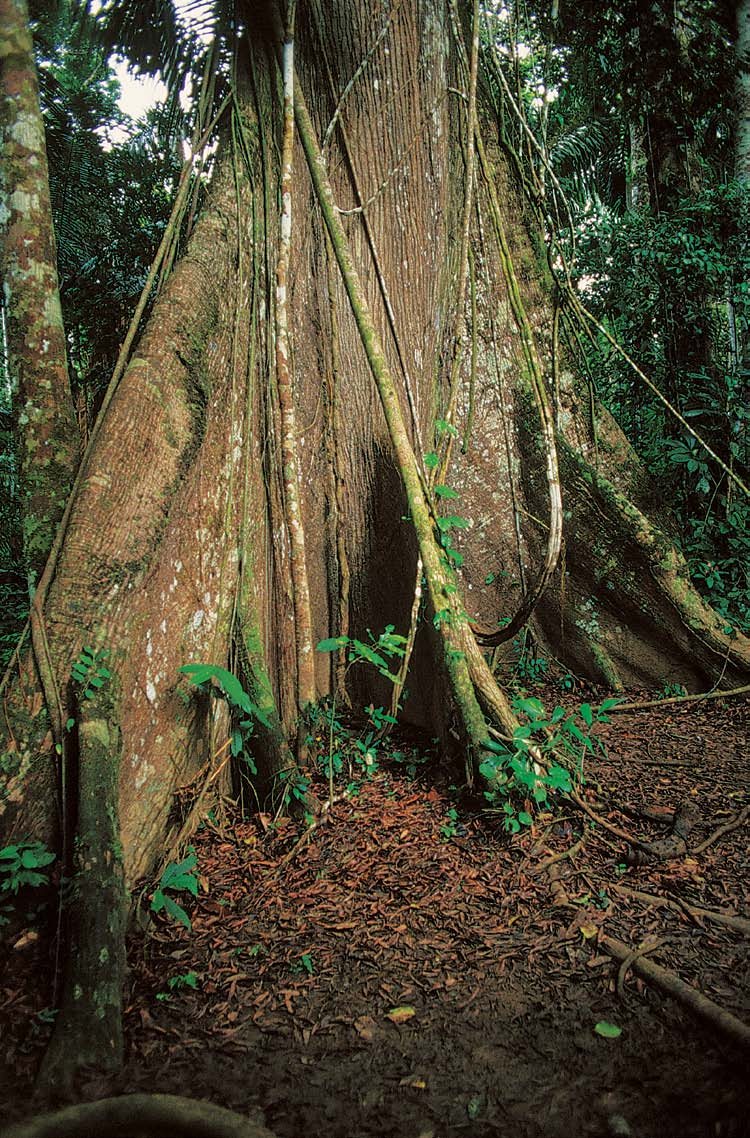
A tree trunk with enormous buttress roots in the forest
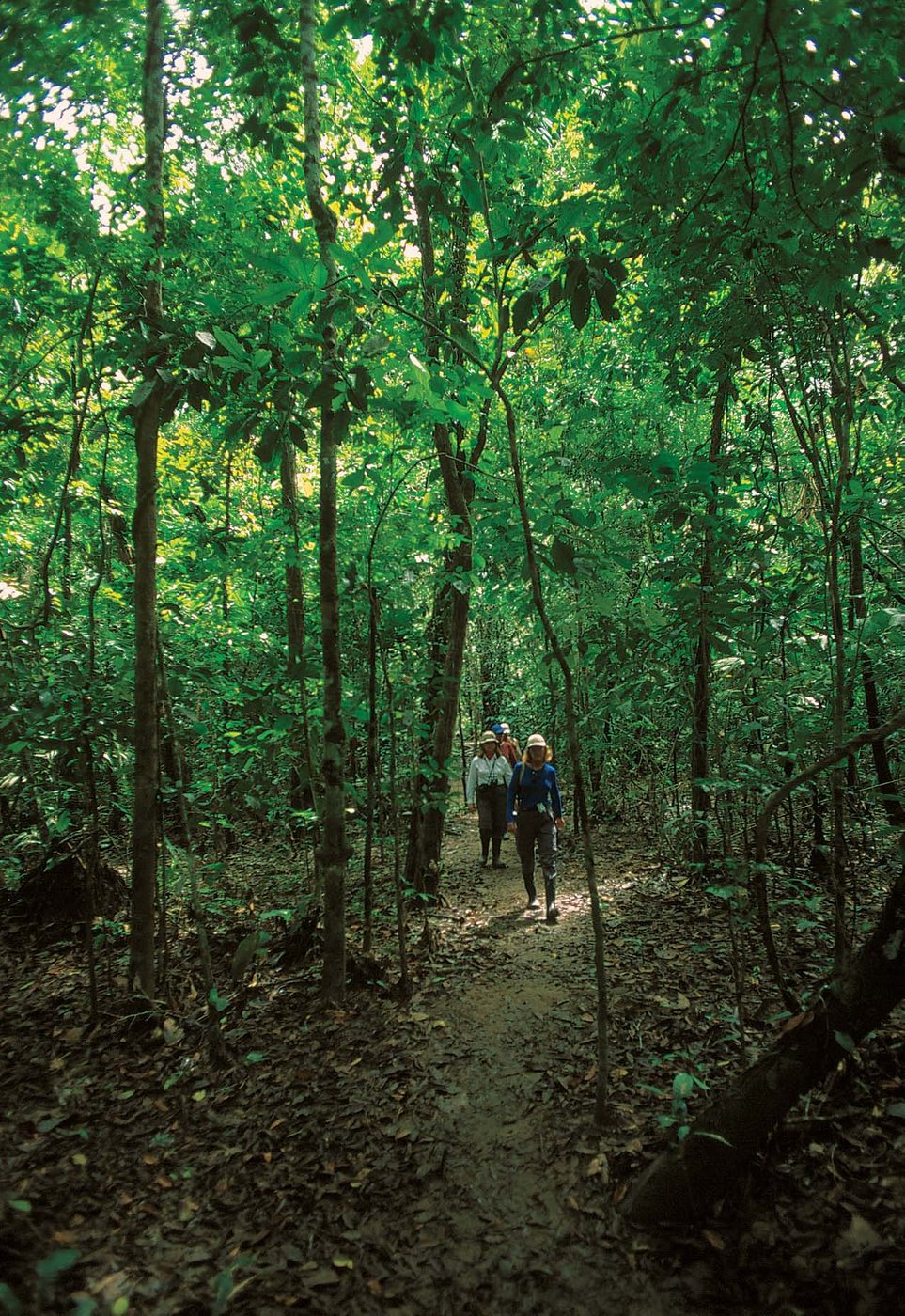
Hikers on a trail among tall trees
Primary forest on the shore of an oxbow lake
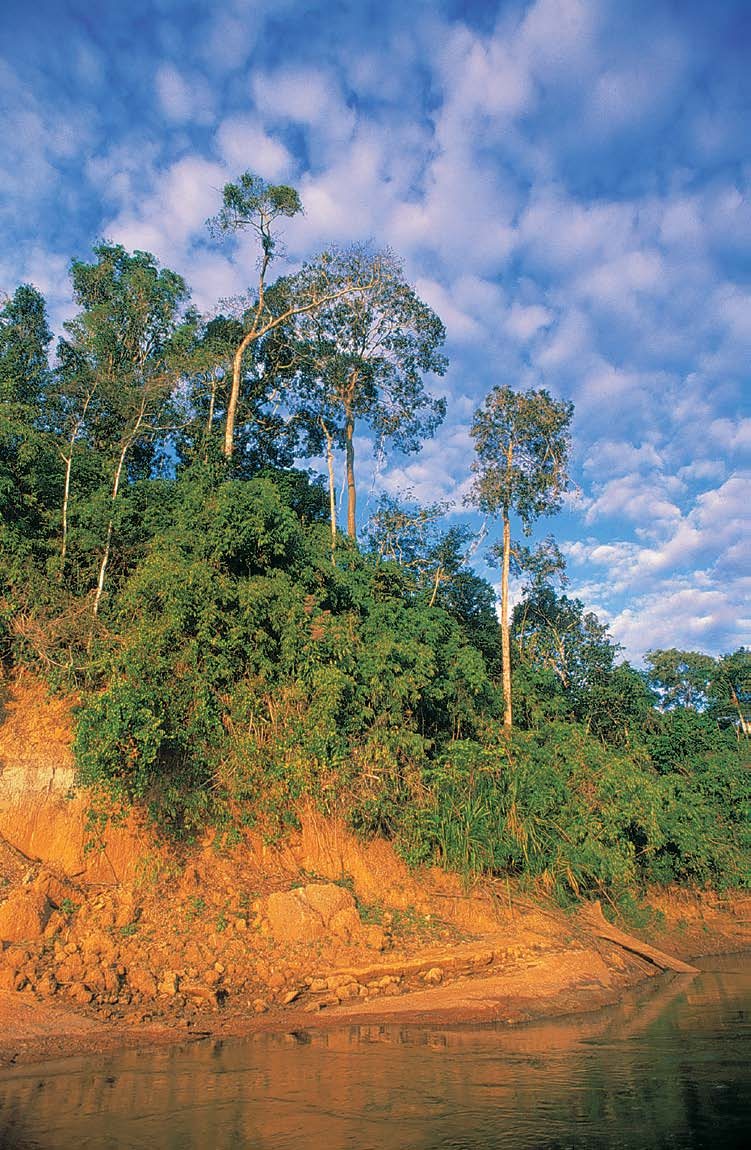
A reddish clay cliff crowned with trees
1 / 4
The buttress roots of a primary-forest tree · Photo: Roberto Fantozzi
Flora

Giants of the lowlands

Ceiba pona, walking palm, huicungo

Trees up to sixty meters tall, with colossal buttresses that dozens of people holding hands could barely encircle, thick lianas and flowering crowns visible from a plane. On the trails you’ll meet the ceiba pona, where macaws nest, the walking palm and the huicungo. Manu’s tallest observation tower, at 40 m, is anchored in a ceiba.

Where
Oxbow-lake trails and the Cocha Camungo tower
Text: Walter H. Wust, Rafo León

Text: Walter H. Wust, Rafo León and the BienVenida team’s road book

Draft: sighting odds and seasons come from the 2003 road book. Confirm with outfitters.

Where to stay

Jungle lodges

Difficult access makes Manu an expensive destination — and that protects its fragile ecosystem. Lodges are found in the Cultural Zone, on the Madre de Dios River, and a handful inside the Park.

Text: Cecilia Raffo, Rafo León

Draft: details and prices from 2003 (3- to 7-day packages between US$500 and US$1,500). Confirm the lodges are still operating.

Where to shop

Community crafts

What you buy in Manu comes from the hands of its peoples.

Text: Rafo León

Festivals

Festival and season

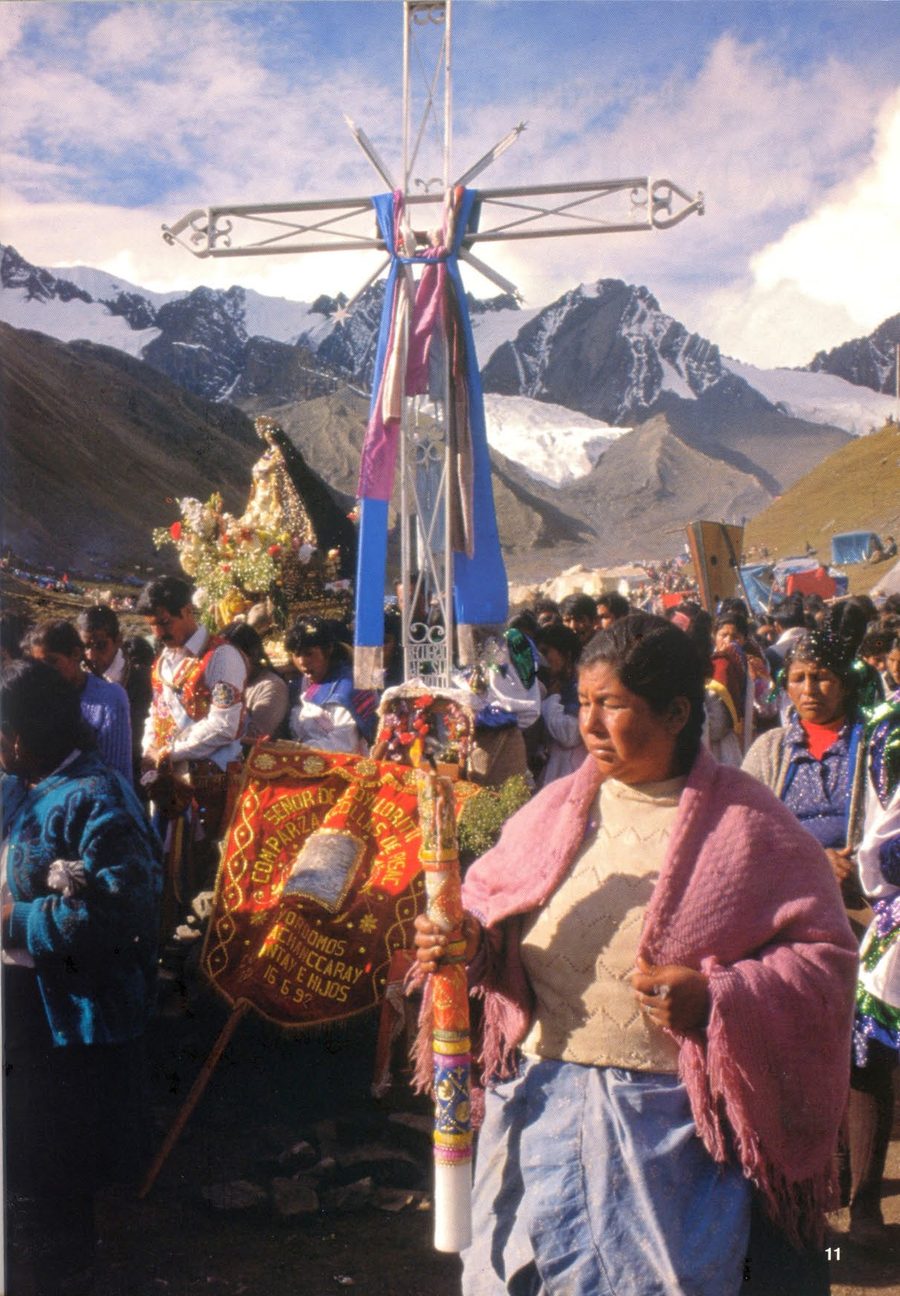
The great festival at the gateway to Manu, and macaw season.

Pending: confirm the dates of the Virgen del Carmen (BV 43 says three days from July 16; BV 35, July 13 to 18).

Keep exploring Cusco

More must-sees in the region

Explore Cusco