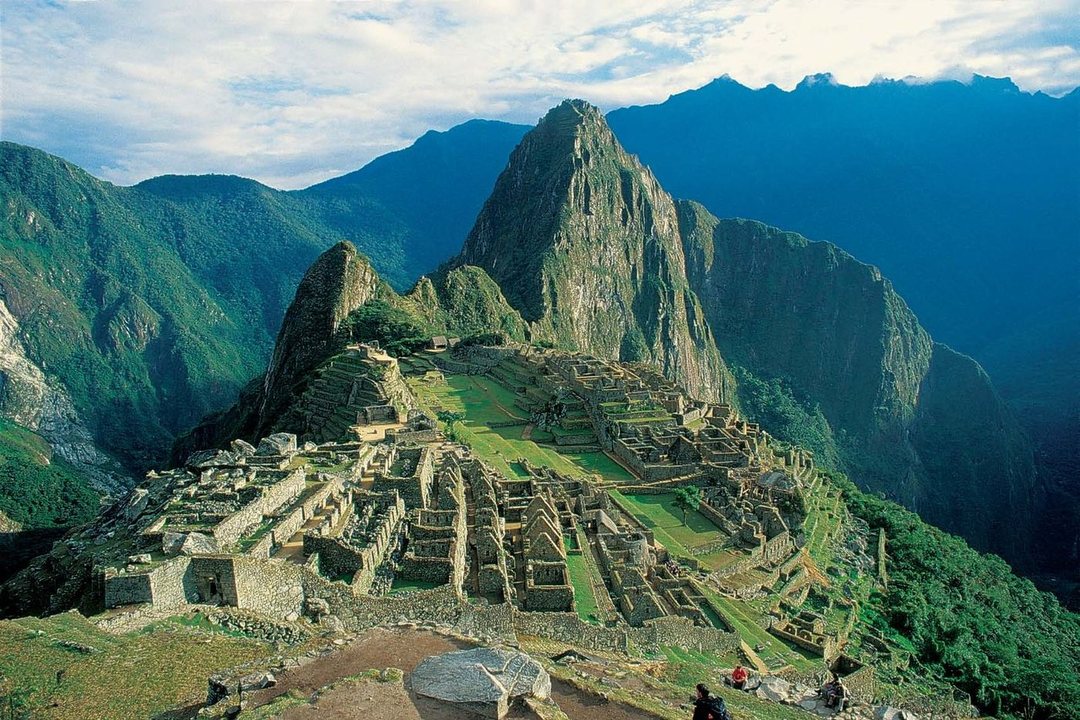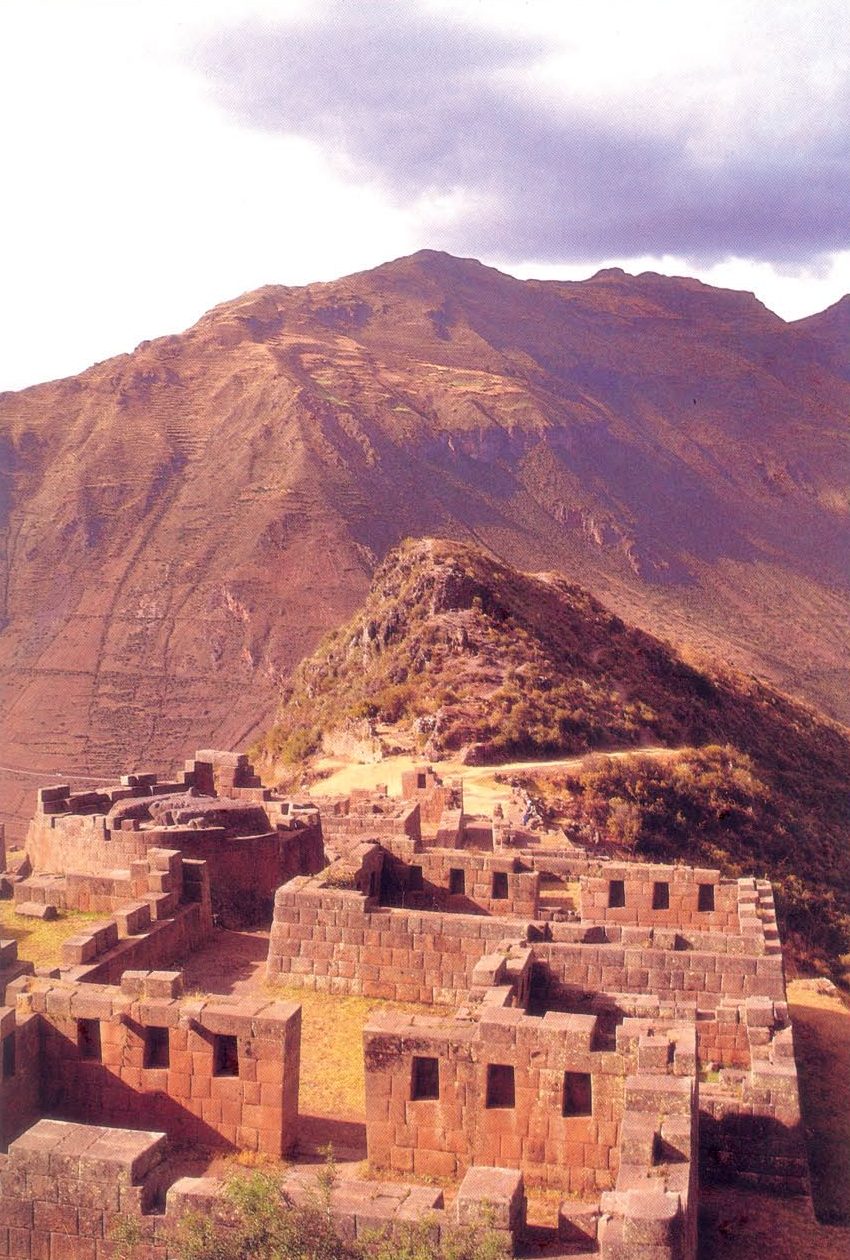

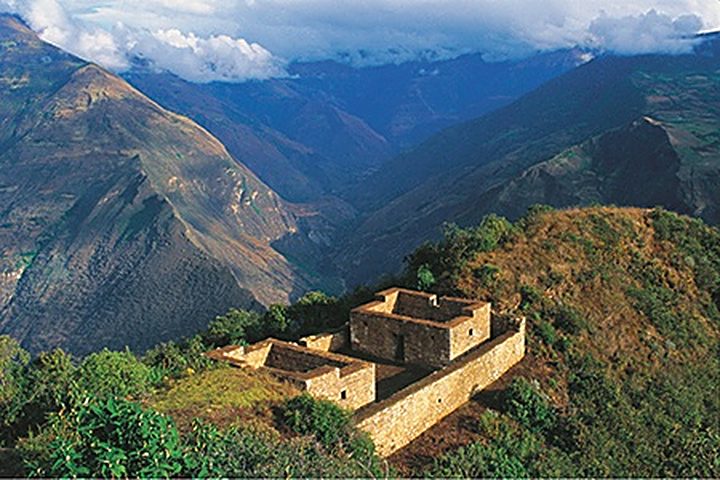
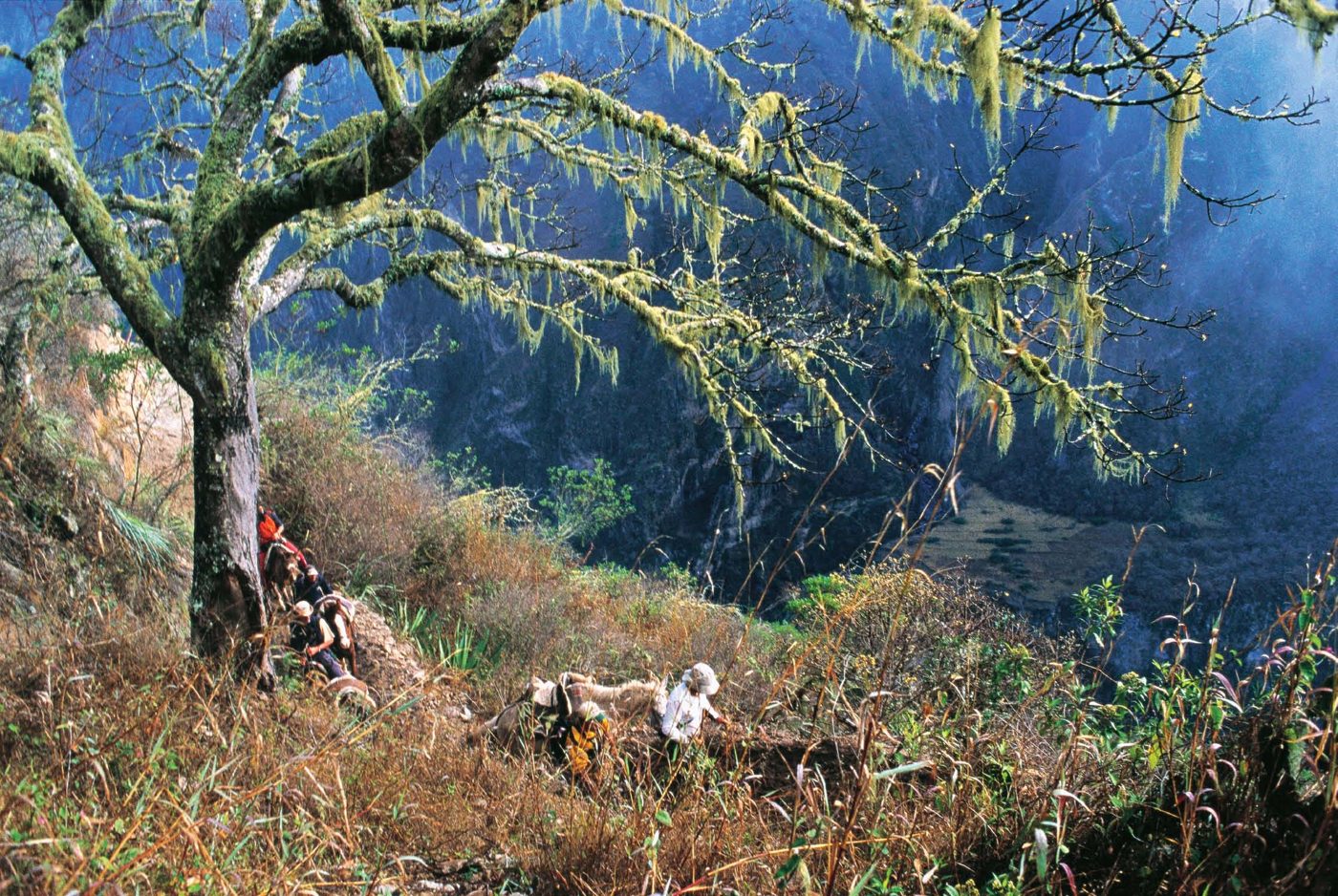
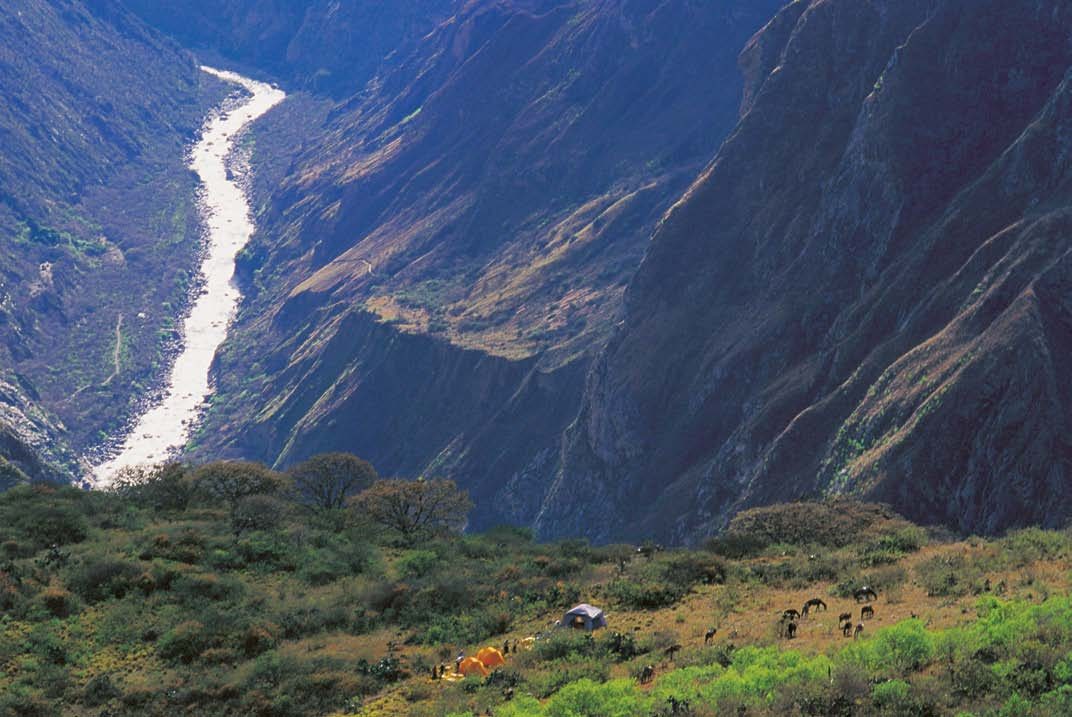

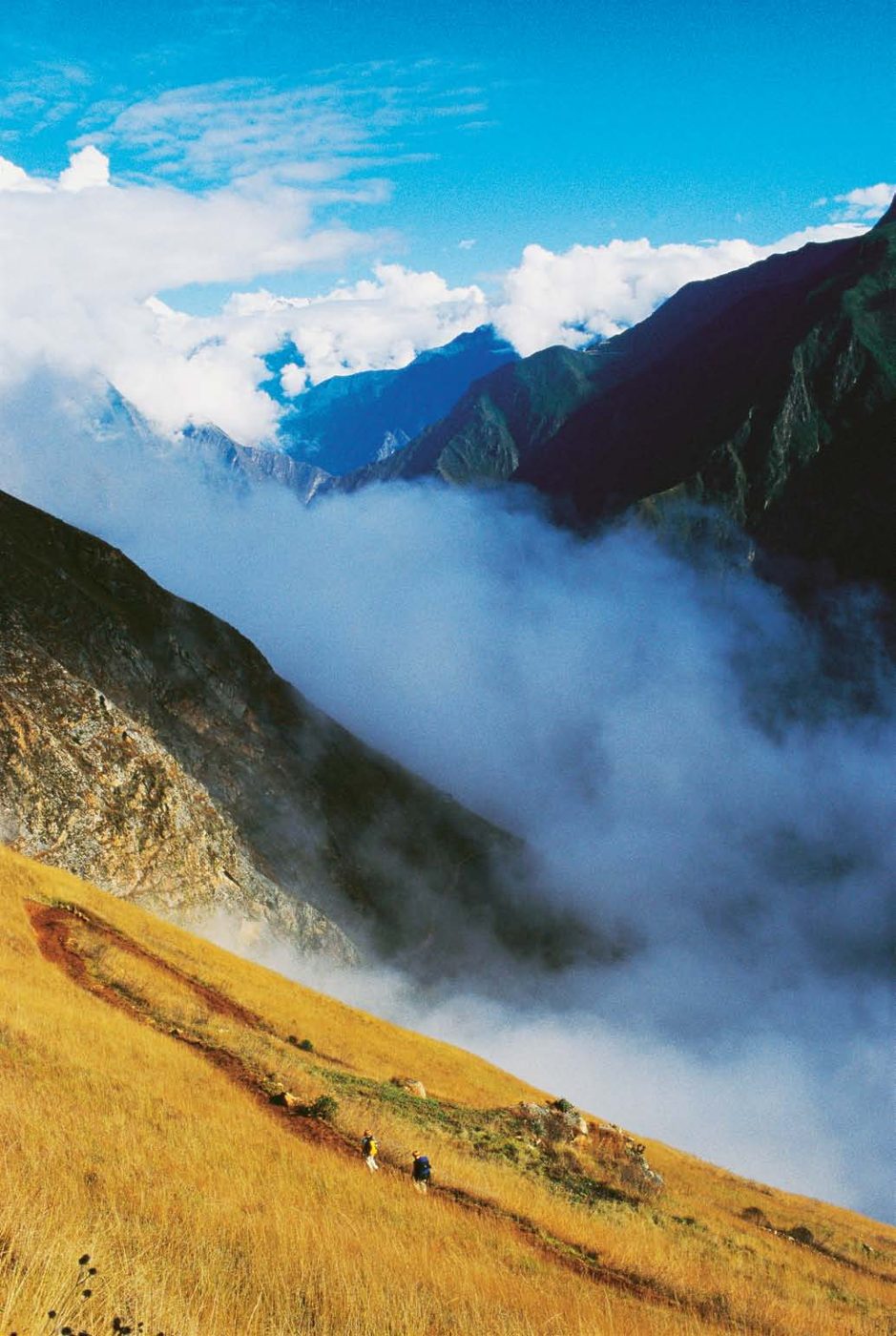
Inca enclosures at Choquequirao above the Apurímac canyonA moss-draped tree above the canyon, beside the ruinsCamp at Chiquiska, with the Apurímac River belowAn Andean bear in the branches of a treeA red-and-yellow bromeliad on a branch
Home › Destinations › Cusco › Choquequirao
Cusco Region

Choquequirao

The Incas’ other lost city: two days of hard trekking through the Apurímac canyon to a citadel whose setting, many say, outshines even Machu Picchu.

Choquequirao, high above the Apurímac canyon

“A visit to Choquequirao should remain the reward of an adventure, never a mass excursion — for that would lay the groundwork for its destruction.”

Rafael León

Cecilia at Choquequirao

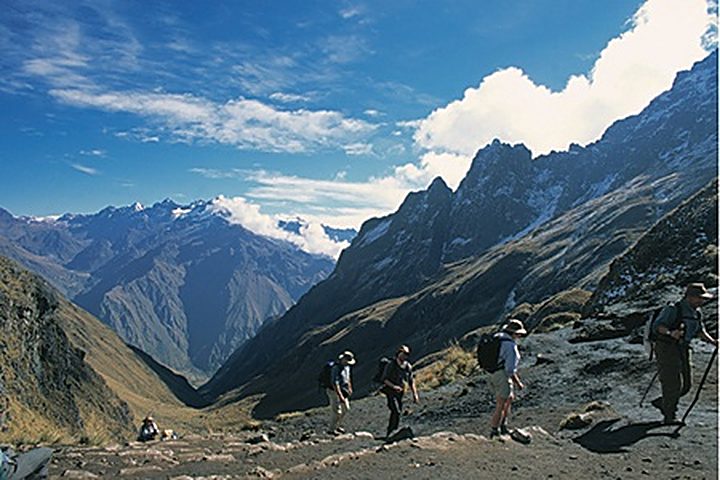
In 2002, Cecilia and the BienVenida team trekked for two days to reach Choquequirao.

“Although there was no doubt that the citadel was the purpose of this extraordinary trip, the scenery surrounding it was at times more splendid than even at Machu Picchu.”

Signature of Cecilia RaffoEditorial, 2002
Read more
  1. 2002

    “The BienVenida team could not wait to see it, so we set off on another adventure. After an arduous two-day trek we finally arrived.”

  2. 2002

    “We should not allow the villages near Choquequirao to become like Aguas Calientes. Let us work together to ensure that this route never loses its powerful attraction to visitors. There is still time to preserve and protect not only the archaeological site, but all its natural surroundings, that have survived for centuries on the summit of a mountain in the Andes, mute witness to one of the greatest civilizations in history.”

Excerpts from the editorials signed by Cecilia Raffo, editor of BienVenida magazine.

Must-sees

Nine reasons to go to Choquequirao

From Cachora you drop 1,300 meters to the Apurímac River, then climb 1,500 to the ruins: thirty kilometers through every climate the Andes can offer. Tap any highlight to follow it in the Road Book.

Road Book BienVenida

Choquequirao, day by day

Thirty kilometers on foot from Cachora, across the Apurímac canyon — exactly as the BienVenida team did it, with their times, campsites and stretches on horseback.

Road book by the BienVenida team

Flora and fauna

Choquequirao in the wild

For naturalists, Choquequirao is much more than stone and adobe above the Apurímac. In just a few kilometers it spans eternal snows at nearly 6,000 meters down to tropical valleys at little more than 1,800, protecting a section of the Vilcabamba range.

  • 6,000 malmost, in the eternal snows
  • 1,800 mtropical valleys
  • +100orchid species
  • +20hummingbird varieties

A descent from the puna to the valley

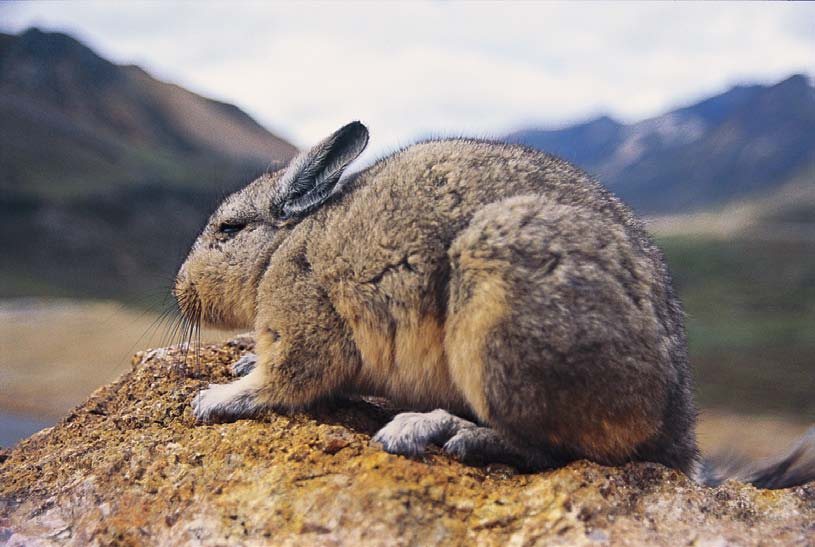
  1. A viscacha on a rock in the puna
    A viscacha among the boulders · Photo: Walter H. Wust
    Above 4,000 m

    Puna

    Wind sweeps the ichu grass and the rocks are cloaked in lichen and moss. Territory of the condor, the taruka deer, the Andean fox, the viscacha and the puma.

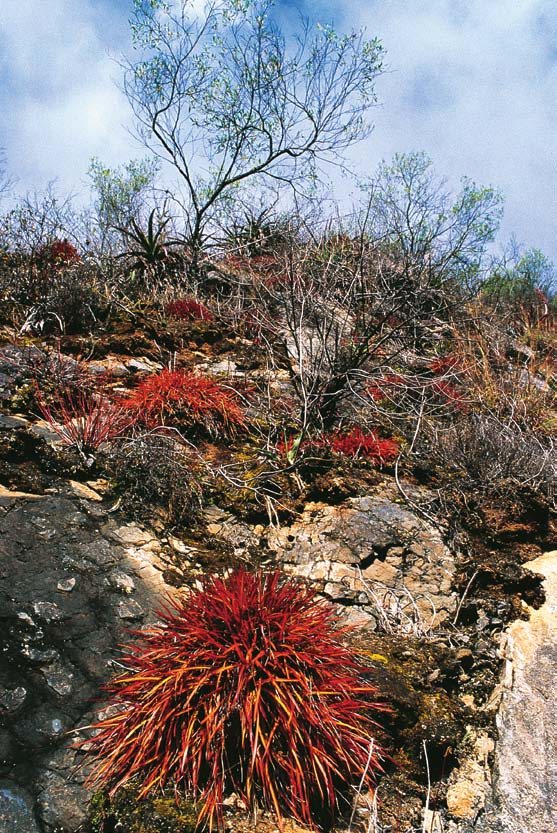
  2. A red bromeliad among shrubs and rocks on the slope
    Bromeliads on the hillside · Photo: Roberto Fantozzi
    Elfin forests

    Elfin forest

    Small trees and giant mosses: the pudú stands no taller than 20 cm and some hummingbirds are the size of a dove. Land of bromeliads and the bomarea, or sullun sullu.

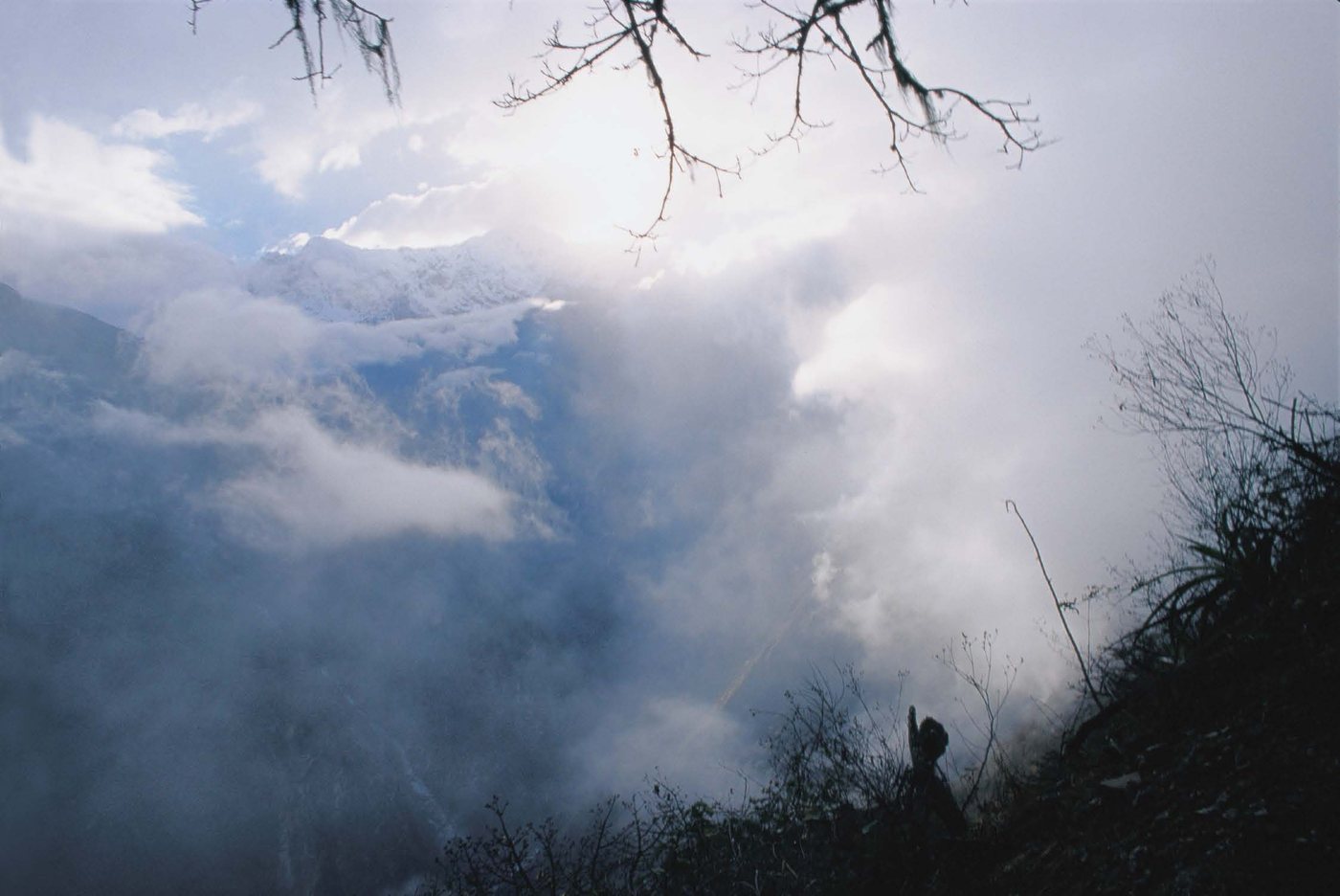
  3. Mist over the mountains, with a hiker in silhouette
    Mist over the cloud forest · Photo: Roberto Fantozzi
    Cloud forest

    Mist forest

    The rainiest zone in the country, revealing itself only when the mist lifts: giant begonias, tree ferns and more than a hundred orchids.

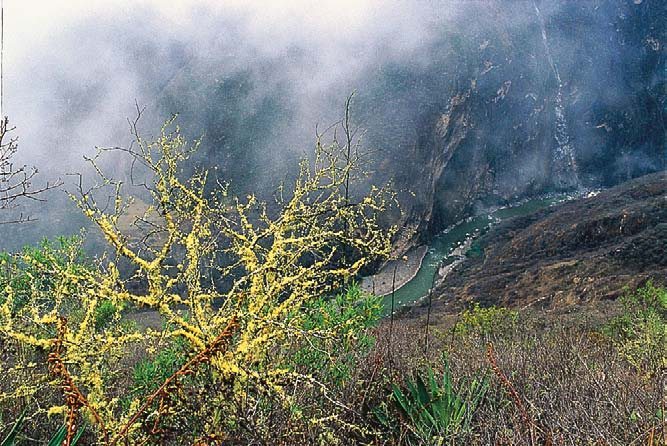
  4. The Apurímac canyon from the lookout
    The Apurímac canyon · Photo: Roberto Fantozzi
    About 1,800 m

    Valley floor

    A warm climate for coca, achiote, corn, cacao, coffee and fruit trees: the pantry of the Incas. Bamboo forests that flower after decades — and then all die at once.

What you can see

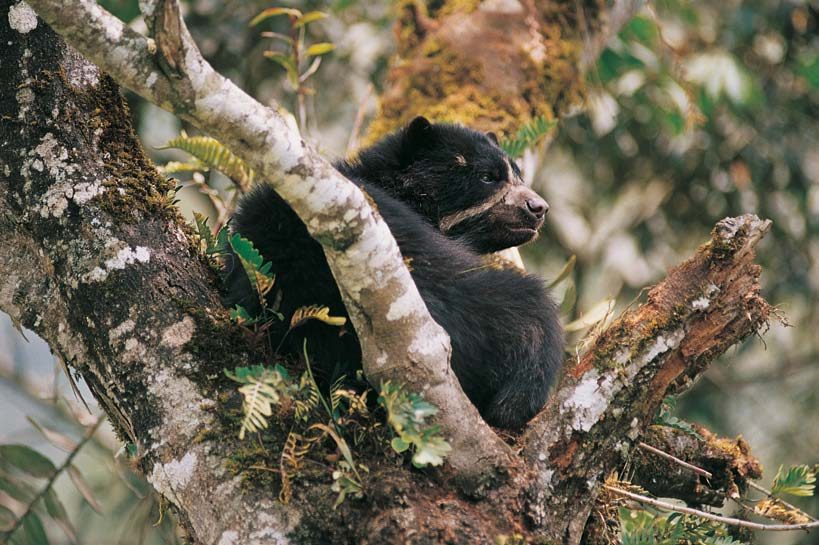
An Andean bear in the branches of a tree
The Andean bear · Photo: Heinz Plenge
Fauna

Andean bear, or ucumari

South America’s only bear

It lives in the high elfin forests alongside the mountain toucan. In the cloud forest it shares its home with the cock-of-the-rock, the woolly monkey, the quetzal and the torrent duck.

Text: Walter H. Wust
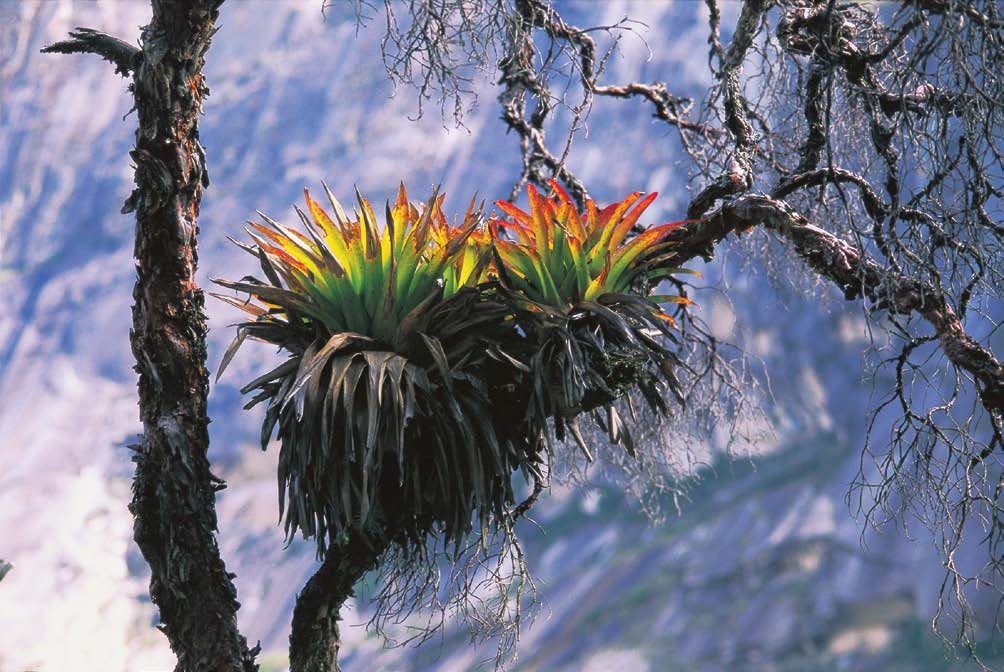
A red-and-yellow bromeliad on a branch
A cluster of bromeliads · Photo: Walter H. Wust
Flora

Bromeliads

Bouquets in the trees

Bromeliads cling to trunks and rocks in the high forests, one of nature’s most prolific and least known environments.

Text: Walter H. Wust
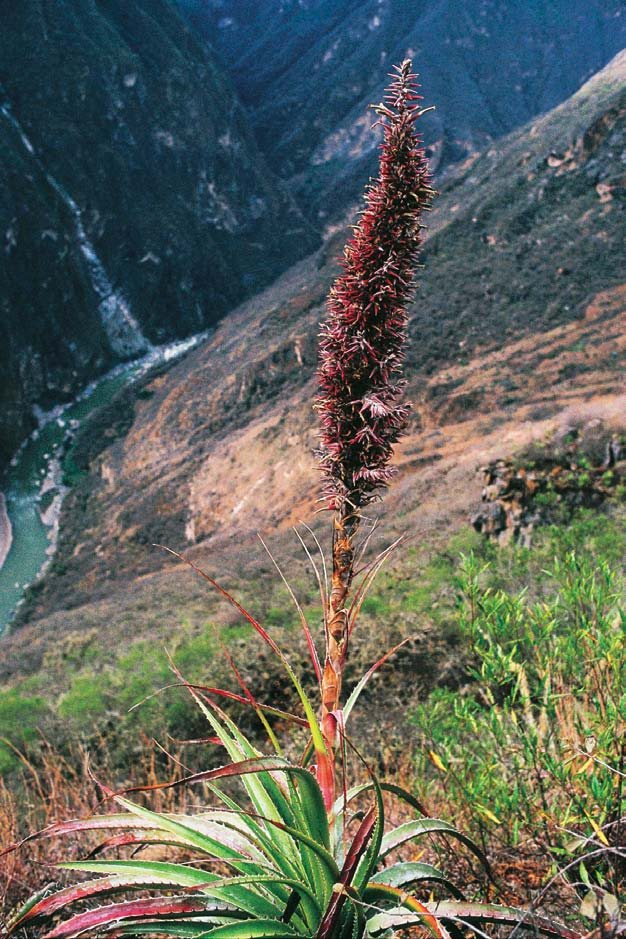
A red flower spike on the canyon slope
Flowers on the slopes of the Apurímac · Photo: Walter H. Wust
Flora

Cloud-forest flowers

Wakanki, wiñay wayna, heliconias

Standouts among the orchids include the wakanki (“you will weep”) and the wiñay wayna (“forever young”). Nectar-filled bellflowers attract bees, beetles and hummingbirds; heliconias look like wax sculptures.

Text: Walter H. Wust
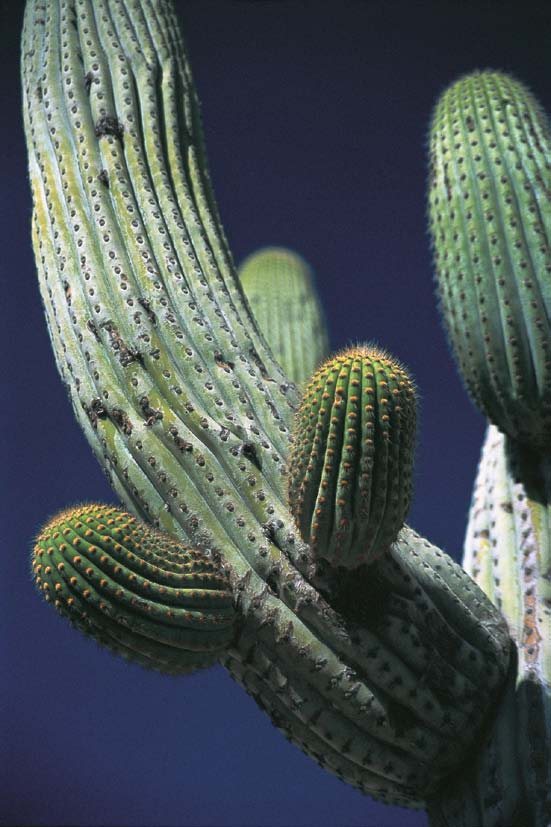
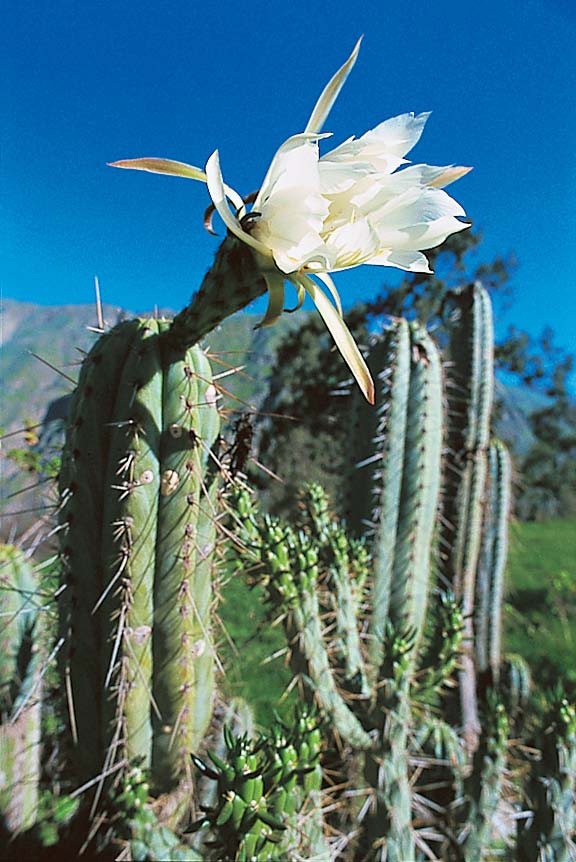
A cactus with a large open white flower
Arms of a columnar cactus against the sky
1 / 2
A trichocereus cactus in bloom · Photo: Roberto Fantozzi
Flora

Dry-valley cacti

Trichocereus

On the canyon’s driest slopes, columnar cacti open huge white flowers.

Text: Walter H. Wust
Flowering shrubs above the canyon, with the river below
Slopes above the Apurímac · Photo: Roberto Fantozzi
Conservation and threats

Fire, the greatest threat

The high-altitude forests capture rainwater and carry it, without erosion, down to the Apurímac. If they disappeared, species almost unknown to science would be lost, and floods and landslides would follow.

Grass fires set in the highlands spiral out of control and spread down into the forest; in recent years they reached the Machu Picchu Sanctuary. Today farmers are being trained and alternatives sought that don’t destroy the forest.

Text: Walter H. Wust, forestry engineer and ecologist

Where to stay

Sleeping under canvas

Choquequirao is a camping trek. Agencies and the muleteers of Cachora bring tents, a kitchen and cookware.

Text: Peter Frost, BienVenida road book

Draft: details from 2002. At the time you could camp anywhere on the site, with no toilets or rangers. Confirm today’s rules and authorized campsites.

Keep exploring Cusco

More must-sees in the region

Explore Cusco